 Kyoto Photoshoot
Geisha vs Maiko: What Actually Separates Them
Type geisha vs maiko into a search bar in Kyoto and the first correction you need isn't about maiko at all, it's about the word geisha itself. Kyoto's own performers use a different term, and the maiko-versus-geiko distinction is an apprenticeship stage, not two separate professions. This page sets out the real visual differences (obi, hair, collar, makeup), where the word geisha does and doesn't apply, and how the dress-up kimono sessions this site catalogues relate to the real, working profession, honestly and without pretending they're the same thing.
Quick answer
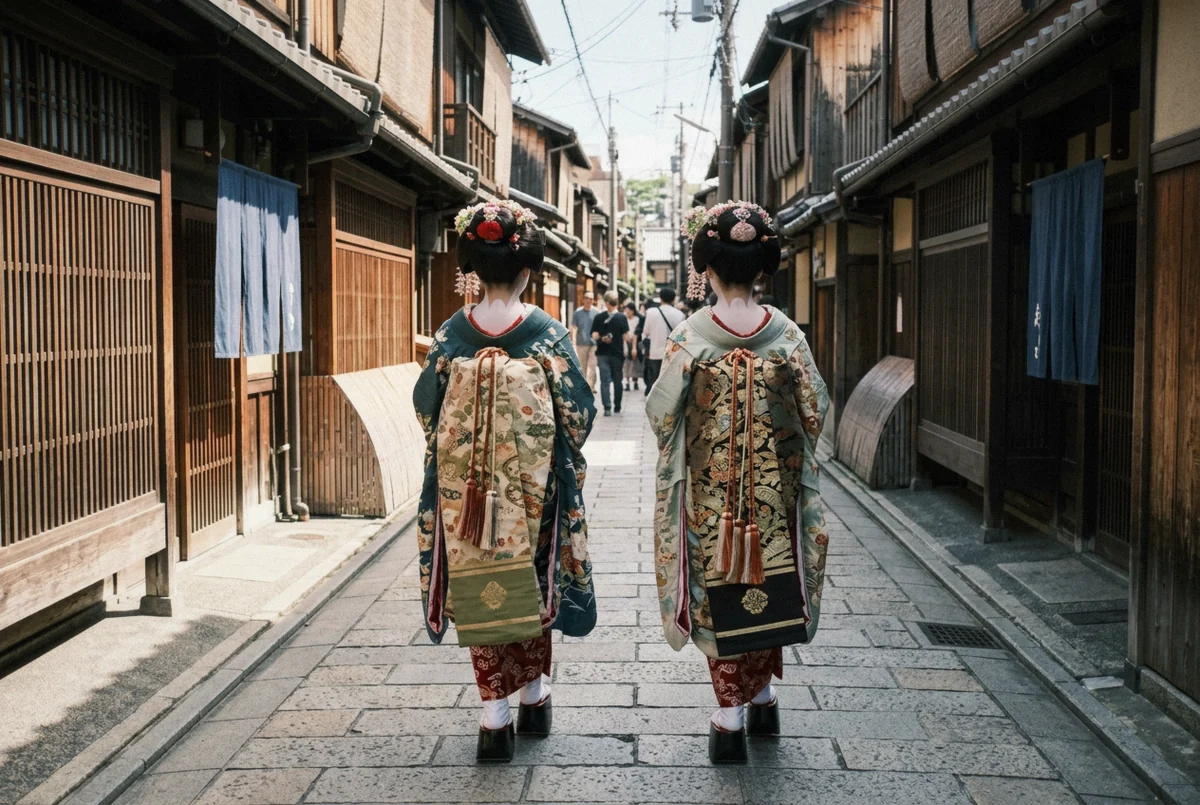
In Kyoto, the correct word for a fully trained professional entertainer is geiko, not geisha; geisha is the broader, more common term used elsewhere in Japan, especially Tokyo. A maiko is an apprentice, working toward geiko status through several years of training before a graduation ceremony called erikae, or turning of the collar. The two look different by design: obi length, hair, collar color and makeup all signal the stage a woman is at, not personal style.
Key takeaways
- Geiko is the Kyoto-dialect word for a fully trained geisha; the two terms describe the same profession, but Kyoto's own community uses geiko
- A maiko wears a long trailing obi and styles her own hair; a geiko wears a shorter tied obi and usually a wig
- The collar tells you the stage at a glance: red for a maiko, white for a geiko, with the shift happening gradually as she nears erikae
- Kyoto has five active hanamachi, or geisha districts, and insiders' estimates put the current total near 100 geiko and 100 maiko across all five, though no official public count is published
- Photographing a geiko or maiko without consent is treated as harassment across the city, on top of the separate side-lane ban in Gion
- The kimono sessions catalogued among Kyoto photoshoot sessions are dress-up experiences and never claim to make you a maiko
Geiko Is the Kyoto Word
Geisha is the word most non-Japanese speakers know, and it's accurate as a general term for a professional female entertainer trained in traditional music, dance and conversation. But Kyoto's own hanamachi, the traditional geisha districts, use a different word for the fully trained version of the role: geiko. The two refer to the same profession; geiko is simply the term this specific community uses for itself, the way a regional dialect word can outlive the more widely known national one. A maiko is the apprentice stage that leads to becoming a geiko, typically starting in her mid-to-late teens and training for roughly three to five years, sometimes longer, in classical dance, shamisen, singing and formal hosting before she's considered ready. The transition has a name and a ceremony: erikae, literally "turning the collar," the moment her collar shifts from the apprentice's red to the geiko's white and she's recognized as fully trained.
Outside Kyoto, particularly in Tokyo's older entertainment districts, the more common regional term for an apprentice is hangyoku rather than maiko, though the profession itself works on a similar principle nationwide: years of training under a senior mentor before full professional status. Kyoto's five hanamachi are where the maiko stage is most visible to visitors today, which is part of why the geisha-vs-maiko question is really a Kyoto question more than a national one.
One more distinction worth naming clearly: a maiko still lives in her okiya, the boarding house run by her senior mentor, and depends on that house for her training, clothes and a modest stipend during her apprenticeship. A geiko, once independent, typically lives on her own and takes bookings directly, which is part of why the two stages are treated as genuinely different life circumstances rather than just a difference in dress. Neither stage is a performance role in the sense of a stage show; both work through private engagements at teahouses, arranged through a hanamachi's own booking system rather than sold as a public ticket.
Kyoto's Five Hanamachi
Hanamachi, literally "flower town," is the name for the traditional geisha districts where geiko and maiko live, train and work. Kyoto has five active ones today.
| Hanamachi | Where | Known for |
|---|---|---|
| Gion Kobu | East of the Kamo River, around Hanamikoji Street | The largest and best known of the five; the district most visitors mean when they say "Gion" |
| Gion Higashi | The smaller eastern half of the Gion area | A separate, smaller hanamachi from Gion Kobu, easy to conflate with it |
| Pontocho | A narrow lantern-lit alley along the Kamo River's west bank | One of the most atmospheric hanamachi streets, especially after dusk |
| Miyagawacho | South of Gion, along the river | A quieter, less touristed hanamachi with its own teahouses |
| Kamishichiken | Near Kitano Tenmangu Shrine, northwest Kyoto | Kyoto's oldest hanamachi, away from the main Higashiyama tourist route |
Maiko vs Geiko: The Visual Differences
The differences aren't stylistic preference; each one signals training stage to anyone who knows how to read it. A maiko's long, trailing darari obi can reach close to ankle length and is deliberately conspicuous, worn with her own natural hair elaborately styled and dressed with seasonal kanzashi ornaments that change month to month. A geiko's obi is shorter and tied in a compact drum knot, and she typically wears a katsura wig styled simply, with few or no ornaments, since the point of a geiko's presentation is refined restraint rather than the maiko's deliberate ornateness.
The collar is the fastest tell at a glance: a maiko wears a red under-collar, a geiko a white one, and the gradual whitening of that collar over her final months as a maiko is a visible countdown to her erikae ceremony. Makeup follows a similar progression rather than a fixed rule: a first-year maiko traditionally paints only her lower lip and skips eyeliner, adding the upper lip and eyeliner as she gains seniority; both a senior maiko and a geiko wear the full white oshiroi face for formal appearances, though geiko makeup is generally more subdued day to day. Footwear closes the picture: maiko wear tall, distinctive okobo platform sandals that also visibly slow and shape her walk, while a geiko wears flatter, traditional zori.
| Feature | Maiko (apprentice) | Geiko (professional) |
|---|---|---|
| Stage | Training, roughly 3 to 5 years | Fully qualified, independent professional |
| Obi | Long, trailing darari obi | Shorter obi tied in a compact drum knot |
| Hair | Own natural hair, elaborately styled with seasonal kanzashi | Usually a katsura wig, styled simply |
| Collar | Red, whitening gradually near erikae | White |
| Makeup | Progresses by seniority: lower lip only in year one, both lips and eyeliner later | Full white face for formal occasions, more subdued day to day |
| Footwear | Tall okobo platform sandals | Flatter zori |
Where You Might See Them, and When
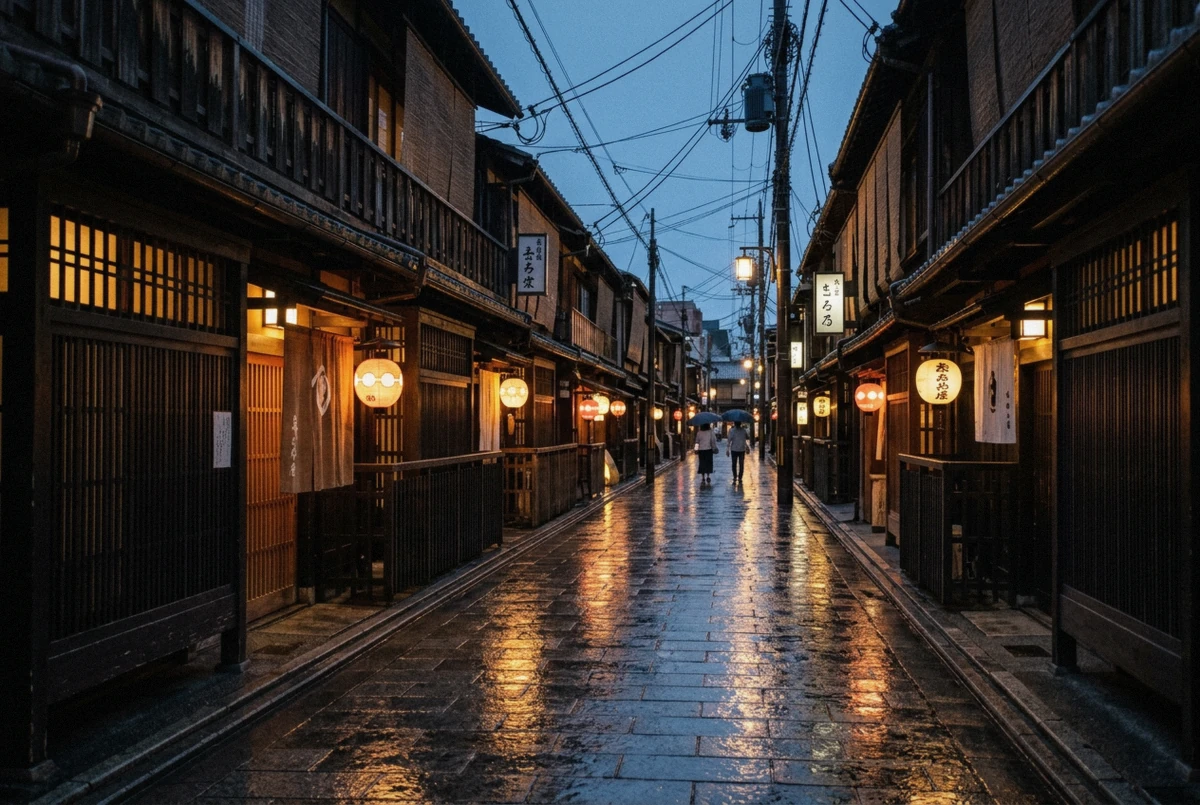
A genuine sighting of a working geiko or maiko is almost always a commute, not a performance: early evening, roughly between about five and seven, when she's walking briskly from her okiya to an appointment at a teahouse in Gion Kobu, Pontocho or Miyagawacho. That briskness is itself a tell; a real geiko or maiko has somewhere to be and rarely stops for photos, which is a large part of why the photography rule below exists.
A more reliable way to actually see geiko and maiko perform, rather than hoping to spot one crossing a street, is one of the seasonal public dance performances the hanamachi themselves stage, such as spring and autumn odori recitals held by individual districts. Exact dates shift year to year and by hanamachi, so check the current year's official schedule for whichever district you're visiting rather than relying on a fixed date here. What's worth setting expectations on plainly: a paid dress-up kimono session, discussed below, guarantees you'll be in kimono in Gion. It does not guarantee, or even meaningfully raise the odds of, seeing a real geiko or maiko that same day.
If you do see one, the respectful response is simple: keep walking, don't block her path to ask for a photo, and if you want a picture, ask first and accept a no without pressing further. She's on her way to paid work, and treating the encounter as a photo opportunity rather than a passing sighting is the exact behavior that led Gion's residents to post the side-lane restriction covered on the next page.
The Photography Rule
One rule matters most here: never photograph a geiko or maiko without her consent, anywhere in the city, since she is a working professional commuting to an appointment, not a tourist attraction. Gion also carries a separate, more specific restriction on its private side-lanes, with posted fines around ¥10,000; the full rule, where it applies and how booked sessions stay inside it has its own page and isn't repeated here. The two restrictions are often confused as one, which is exactly the confusion that gets visitors into trouble.
Dress-Up Experiences vs the Real Thing
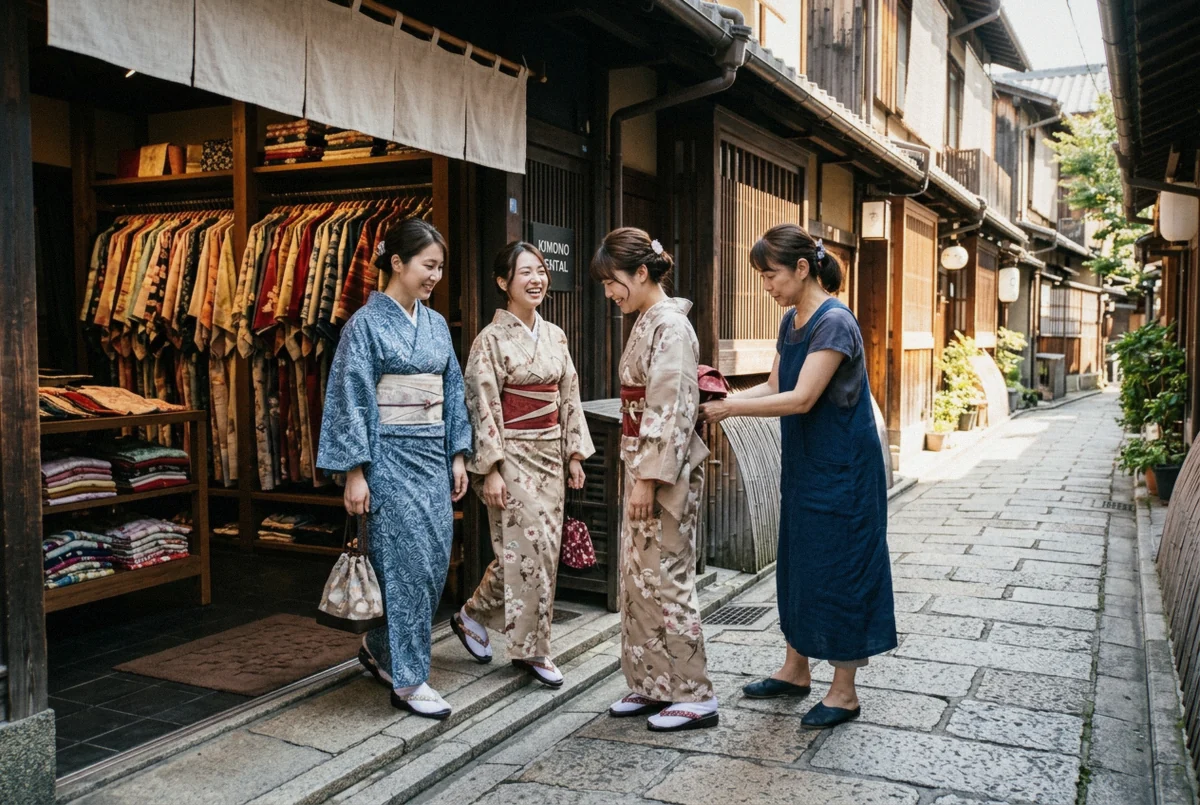
It's worth being direct about this: a kimono makeover or a Gion-district photoshoot session, including the ones catalogued on this site, dresses you in a kimono and photographs you in Gion's public streets. It does not train you as a maiko, does not involve any of the years of apprenticeship described above, and shouldn't be marketed or understood as such. The kimono makeover session bundles a rental and a photographer-led walk at the lowest entry price in the catalogue; the Gion district specialist session goes deeper into the same lanes with longer bookings. Both are honest, straightforward tourist photography experiences, and the distinction from a real geiko or maiko's years of training is worth holding onto rather than blurring for a better photo caption.
If the goal is simply photographs in the district's most photogenic corners rather than the kimono itself, the full 24-spot map of Kyoto's photo locations covers exactly which lanes and canals photograph best and at what hour, with or without a kimono.
The honest framing that holds all of this together: a booked photoshoot sells you an afternoon in Gion's public streets, dressed in a rented kimono, photographed by someone who knows the district's light and its rules. It never sells you the years of training, the okiya household, or the working relationships that make someone an actual maiko or geiko, and no listing on this site claims otherwise.
What Are You Actually Looking For?
If you want to see real geiko or maiko
stand on a permitted Gion street around six in the evening and accept that you may see nobody; they are commuting, not performing. The rules that apply
If you want to watch them perform
book a seat at a public dance or a teahouse event rather than waiting in a lane, which is the only way the encounter is consensual on both sides
If you want photographs of yourself in traditional dress
that is a dress-up session, and it is what the kimono packages do; nobody involved is a geiko or claims to be
If you want to photograph the district itself
the machiya streets and the Shirakawa canal are the frames worth your card space. Where and when they work
Geisha vs Maiko: Common Questions
Do geisha still exist today?
Yes. Geiko and maiko are still active across Kyoto's five hanamachi, though in far smaller numbers than in the profession's early-20th-century peak. Insiders' estimates put the current total near 100 geiko and 100 maiko citywide, though no official public census is kept, so treat any precise figure as an estimate rather than a hard count.
Is a geisha higher ranked than a maiko?
It's a stage rather than a rank in the sense of a promotion ladder: a geiko is the fully trained professional, and a maiko is the apprentice working toward that status through several years of training. A maiko isn't a lesser version of the role, she's partway through becoming a geiko.
How long does it take to become a geiko?
Typically three to five years as a maiko, sometimes longer, followed by the erikae ceremony that marks the formal transition. The exact timeline varies by individual and by hanamachi.
Can tourists become a maiko for a day?
Tourists can rent kimono and hair styling designed to resemble a maiko's look for photos, which is a dress-up experience, not an apprenticeship. It carries none of the years of training described above and shouldn't be confused with the real thing.
How can you tell a real geiko from a tourist in kimono?
Pace and direction are the fastest tells: a real geiko or maiko is usually moving briskly toward a specific appointment in the early evening, not posing for photos. Her obi, hair and collar also follow the exact conventions in the table above, which most tourist kimono rentals don't replicate precisely.
What is erikae?
Erikae, literally "turning the collar," is the ceremony marking a maiko's graduation to full geiko status, when her collar shifts from red to white for good after several years of training.
Is geisha the wrong word to use in Kyoto?
It's not wrong exactly, since geisha is widely understood as the general term, but geiko is the word Kyoto's own community uses for itself. Using geiko when you're specifically talking about a Kyoto performer is simply the more accurate, locally correct term.