 Kyoto Photoshoot
Is a Kyoto Photoshoot Worth It? An Honest Look
Is a Kyoto photoshoot worth it, or is it thirty minutes of awkward posing for photos you'll never look at twice? Reddit threads and Facebook travel groups return that exact question more than any travel blog does, which tells you the honest answer isn't a marketing line, it's a set of real trade-offs. The Kyoto photoshoot comparison exists because those trade-offs change depending on which of the twelve sessions you pick, your budget, and how much you actually mind a camera pointed at you.
Quick answer
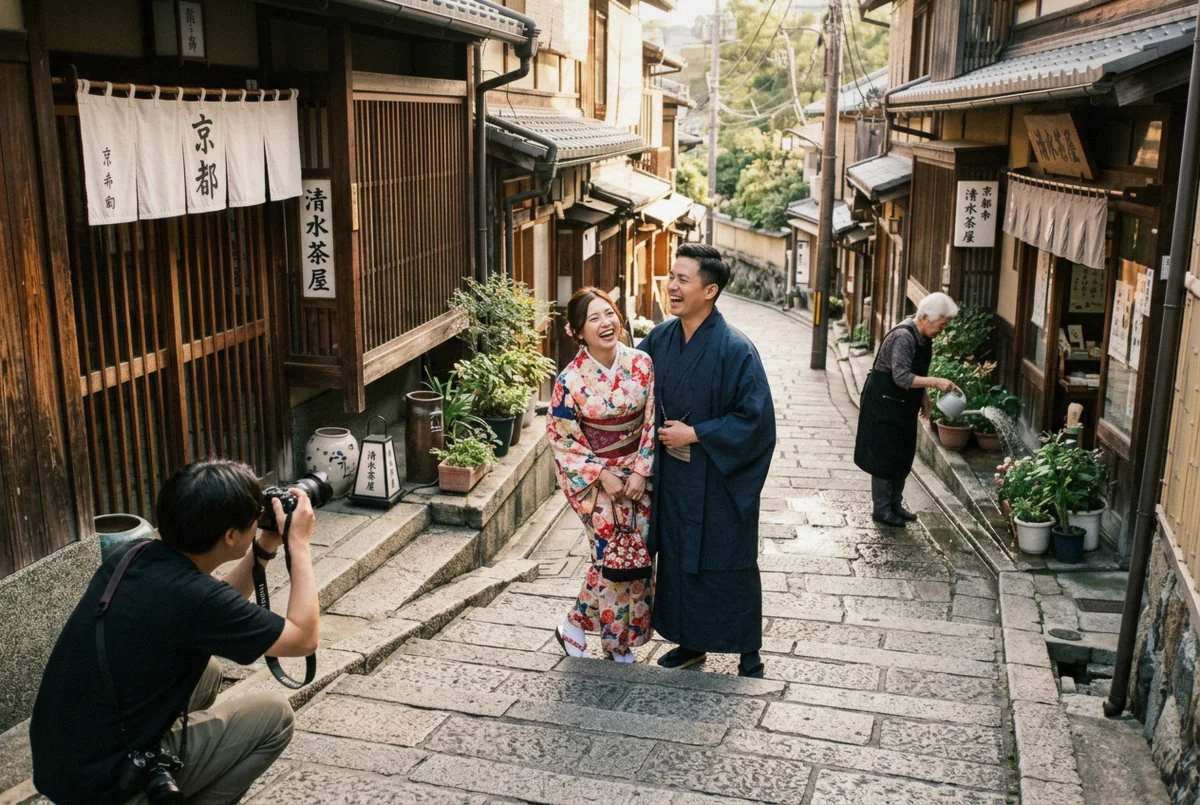
Yes, if you book an early slot and want real photos of yourself in Kyoto rather than another tourist selfie; no, if you're camera-shy in a way no amount of direction will fix, or you only have one tightly scheduled day. Sessions in this catalog run from $29 to around $130, and what you actually get back is thirty to two hundred edited photos taken by someone who already knows where the light and the crowds are.
Key takeaways
- Prices run from $29 for the cheapest kimono makeover to about $130 for the longest private sessions; the full price breakdown covers every tier
- The single best reason to go: a directed photographer gets you photos of yourself in Kyoto, not just of Kyoto, which is the one thing your own phone can't do well
- The single biggest honest downside: feeling stiff in front of a stranger's camera for the first five minutes, before direction actually kicks in
- Skip it if you're not comfortable being photographed at all, or if your one full day is already booked solid elsewhere
- Book an 8am or earlier slot; every failure mode below gets worse after 9:30am when the lanes fill up
The Balance Sheet
What we genuinely like
- You get photos of yourself in Kyoto, not just scenery, which a solo traveler or a couple taking turns with a phone almost never manages well
- A local photographer already knows which lane photographs best at which hour, so you're not guessing your way through a crowded 10am Sannenzaka
- Direction fixes stiffness fast: reviewers across multiple listings describe going from nervous to relaxed within the first few minutes once a photographer starts giving concrete poses
- The cheapest entry point, a $29 kimono makeover with a photographer-led walk, costs less than a single nice restaurant meal for two
- Free cancellation up to 24 hours before the session on every listing in the catalog removes the weather-gamble risk of booking early
The honest downsides
- Crowds by mid-morning can crowd your background and your patience if you book a 10am or later slot instead of dawn
- The first few minutes in front of a camera can feel genuinely stiff, especially if you've never been directed before
- Delivery isn't instant: most sessions return edited photos within 24 hours to a few days, but the slowest listing in the catalog takes up to 10 days
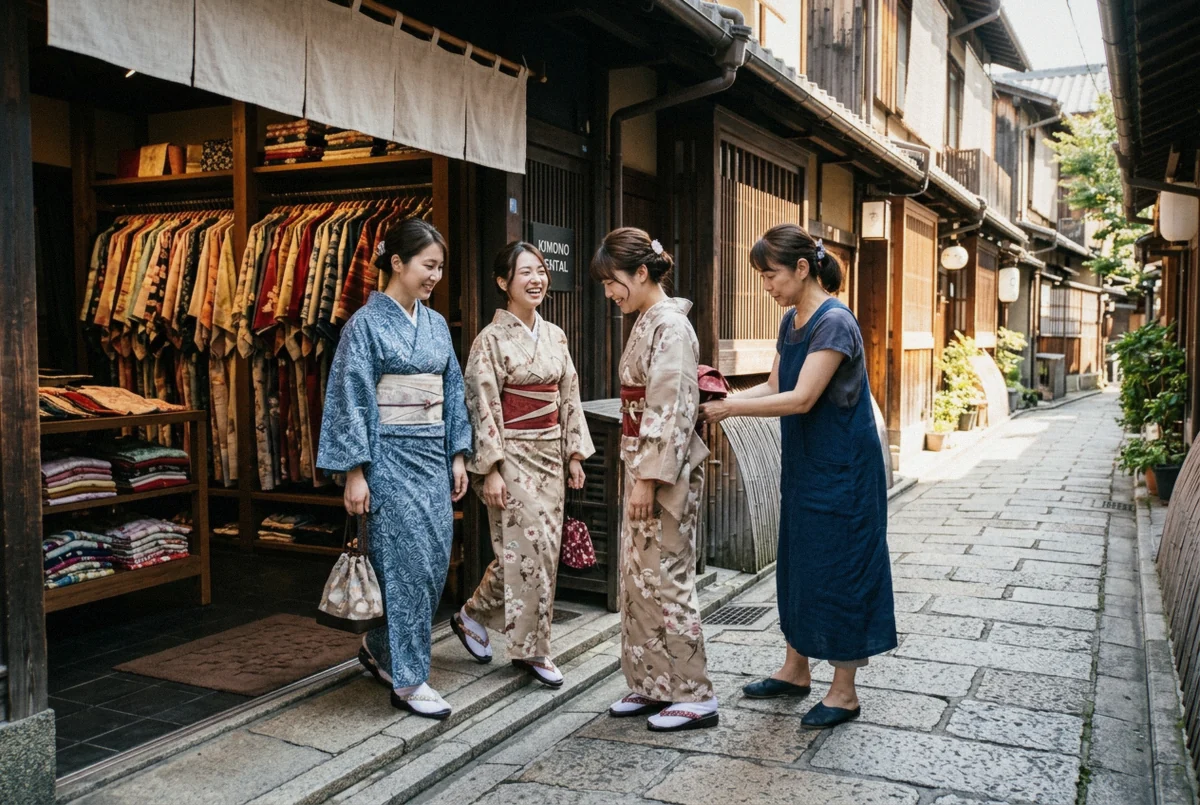
- A kimono session adds real prep time, 45 to 90 minutes of dressing before the shoot even starts, which eats into a tight day
Who it's NOT for: Travelers who are genuinely uncomfortable being photographed by a stranger, or anyone whose Kyoto day is already fully scheduled with no early-morning slot to spare
What It Actually Costs
The catalog's twelve sessions cluster into three real price tiers, not a single flat rate, and the tier drives duration and photo volume more than it drives quality.
| Option | Typical price | Duration | Best for |
|---|---|---|---|
| Kimono makeover, photoshoot & guided tour | from $29 | 30 minutes to 1 day | The lowest entry price, and the classic kimono photo without the studio markup |
| Props & travel photography | from $42 | 30 minutes to 1.5 hours | The biggest photo haul relative to price, priced per group up to 6 |
| Private photoshoot service | from $53 | 45 minutes to 1.5 hours | The most-reviewed session in the catalog, straightforward and low-friction |
| Choose-your-location shoot | from $76 | 1.5 hours | Picking between Gion, Arashiyama or Fushimi Inari as your backdrop |
| Gion district specialist | from $85 | 1 to 6 hours | A deeper, longer session through Gion's lanes with every unedited JPG included |
| Private kimono experience | from $128 | 2 to 7 hours | A full private day: dressing, historic streets and a professional shoot, couples or solo |
| On your own, phone and tripod | $0 out of pocket | As long as you like | Confident self-shooters at graphic, high-contrast spots; no direction included |
Who It's Worth It For, and Who Should Skip It
It's worth it for the traveler who wants proof they were actually in Kyoto, not just proof Kyoto exists. Couples on a honeymoon or anniversary trip, families who want one real portrait instead of forty blurry selfies, and solo travelers who never appear in their own photo album are the three groups every catalog session is really built for. It's also worth it for anyone who already plans to rent a kimono; the sessions that supply the outfit turn a costume rental into an actual keepsake instead of ten seconds of photos taken by whoever happens to be standing nearby.
Skip it if being photographed by a stranger makes you genuinely uncomfortable in a way that direction won't fix. No photographer eliminates that; they only make posing easier for people who are willing but nervous. Skip it too if your Kyoto day is already back-to-back with a fixed itinerary; every session works better with an early slot, and squeezing one in at 2pm between two other bookings tends to produce the crowded, rushed version of the experience rather than the calm one reviewers describe.
What You Actually Get Back
The photo count varies more than the price does. The most-booked session in the catalog, the private photoshoot service, delivers 200-plus original images plus 30 to 40 edited photos you choose yourself. The props session goes further on volume, over 100 high-quality shots and 10 retouched images from a single one-hour booking, priced per group rather than per person. On the other end, the night pagoda session hands over 20 to 50 edited photos depending on whether you book 10, 30 or 60 minutes, which is plenty for a couple who want one striking after-dark portrait rather than a full album.
What you don't get, on nearly every listing, is instant delivery. Most sessions send edited photos within 24 hours to a few days; the slowest in the catalog, a kimono session shot inside a 100-year-old townhouse, states edited photos arrive by email within 10 days. If you're leaving Kyoto in 48 hours, that delivery window matters as much as the price tag does, so check it before you book rather than after.
| Session | Photos you get | Delivery time | Rating |
|---|---|---|---|
| Private photoshoot service | 200+ originals, 30–40 edited | Not stated per session; album delivered online | 5.0 (198 reviews) |
| Props & travel photography | 100+ photos, 10 retouched per hour | Not stated per session | 5.0 (8 reviews) |
| Gion district specialist | All unedited JPGs plus edited set | Unedited within 24 hours; edited typically within 24 hours off-season | 5.0 (93 reviews) |
| Night pagoda session | 20 to 50 edited photos by plan length | Within one week by email and Google Drive | 5.0 (8 reviews) |
| Townhouse kimono session | Edited digital photos, one shoot option | Within 10 days by email | 4.8 (105 reviews) |
| Samurai studio session | 10 edited per person, max 40 per group | Within 24 hours via Google Drive | 4.6 (7 reviews) |
The Honest Failure Modes, and the Fix for Each
Crowds are the complaint that shows up most in reviews and forum threads, and it's almost always a timing problem rather than a booking problem. Kyoto's famous lanes, Sannenzaka, the bamboo grove, Fushimi Inari's torii tunnels, are empty at dawn and a river of tour groups by 9:30 or 10am. The fix is simply booking the earliest slot a session offers; one operator explicitly recommends sessions between 8:00 and 11:00am in spring and autumn specifically to beat the crowds, and reviewers on the most-booked listing describe having entire lanes to themselves at 8am.
Feeling stiff in front of the camera is the second recurring theme, and it fades faster than most first-timers expect. One reviewer wrote she was extremely nervous going in, but that every stage of the session was relaxed and straightforward once the photographer started directing poses. That pattern repeats across listings: a photographer who gives concrete instructions, turn here, chin down, walk toward me, gets a self-conscious traveler through the awkward opening minutes far faster than trying to pose naturally on your own ever would.
Delivery waits are the quieter downside, addressed above, and worth checking against your actual departure date before booking. And a kimono session specifically adds a real time cost most people underestimate: 45 to 90 minutes of dressing and hair before the photographer even shows up, which is worth planning around if your day has a hard stop.
One more failure mode surfaces in reviews rather than in any listing's fine print: rented kimono sandals have very little grip, and one reviewer described walking in them as a real challenge in summer heat, adding that other guests had switched to sneakers, which looked out of place in photos but solved the problem. Carrying a comfortable pair of shoes to change into between shots, and only stepping back into the sandals for the actual frame, sidesteps the issue entirely; the full what-to-wear guide covers the footwear question in more depth.
Cheaper Alternatives That Actually Work
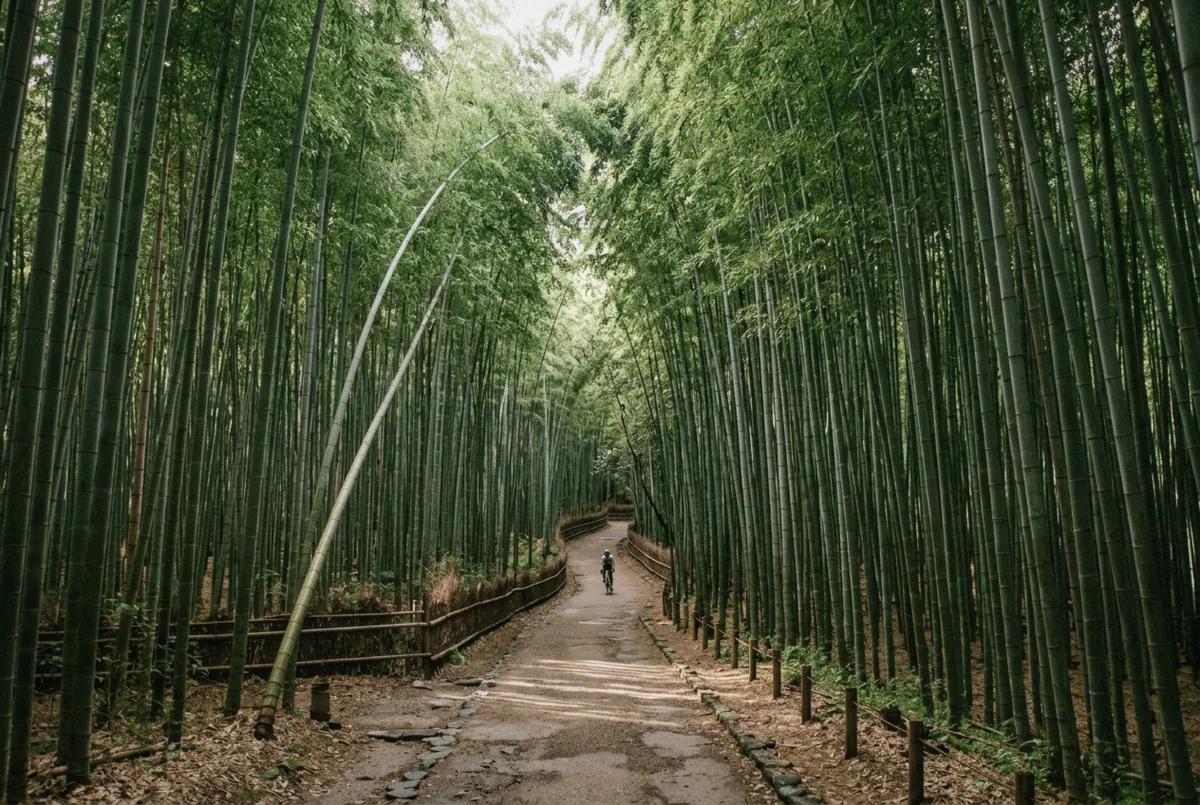
A phone and a tripod genuinely suffice for the traveler whose main goal is a decent photo of themselves at one or two spots, rather than a full directed session. Kyoto's iconic frames, the Yasaka Pagoda from Sannenzaka, the bamboo grove's striped light, are graphic enough that a phone on a small tripod with a timer or remote shutter can produce a solid result, especially at the same early hours a professional session would choose anyway. What a phone can't replicate is direction: someone telling you where to stand, how to angle your shoulders, and when the light is actually working, which is the gap a $29-and-up session closes.
At the other end of the market sit concierge-style private photography services that operate outside this catalog entirely, often starting around $325 for a comparable hour once you add a dedicated English-speaking guide, wardrobe styling and same-day editing on top. The full price ladder, including what actually drives the spread between a $29 listing and a $130 one, breaks down exactly what that extra money buys versus what a catalog session already includes.
What a Fair Price Actually Looks Like
Is $100 an hour good for a photographer? In Kyoto, it's on the high side for a catalog session and roughly the midpoint for the concierge-style market outside it. Every listing in this catalog charges per session or per group rather than a strict hourly rate, and the spread runs from $29 for the cheapest kimono makeover up to about $130 for the longest private and specialty sessions, so an effective hourly cost of $100 only shows up on the shortest, priciest bookings. What drives the spread is mostly photo volume and inclusions, not raw shooting time: a $29 session and a $85 session can run a similar length, but the pricier one hands over more edited images, a longer route through the district, or a specialty backdrop like the bamboo grove or a lit night pagoda.
Outside this catalog, concierge photographers who bundle a dedicated English-speaking guide, wardrobe styling and same-day editing commonly start around $325 for a comparable hour, which puts a $100-an-hour catalog session solidly in the middle of the actual market rather than at either extreme. The full price ladder breaks down every tier in the catalog by exactly what that price buys, tier by tier, so you're not guessing at what's driving the number.
Booking Without Overpaying or Overbooking
Every session in the catalog carries free cancellation up to 24 hours before the shoot, which removes the single biggest risk in booking a weather-dependent outdoor session weeks ahead: you can lock in the early slot you want now and still cancel penalty-free if the forecast turns bad the day before. Booking a week or two ahead is enough for most listings; the exception is sakura season, late March through mid-April, when the cherry blossom session and other spring-dated bookings sell out earlier because the flowering window itself is only two to three weeks long.
Reserve-now-pay-later is standard across the catalog too, so there's rarely a financial reason to wait. The only real cost of waiting is losing the early-morning slot that makes the difference between an empty lane and a crowded one, which is worth locking in as soon as your Kyoto dates are fixed rather than leaving for the week itself.
Is It Worth It for You?
If you want at least one real photo of yourself in Kyoto, not just of the scenery
book it, and take the earliest slot the listing offers
If you're nervous in front of a camera but not opposed to trying
still worth it; direction fixes stiffness faster than most first-timers expect
If you're genuinely uncomfortable being photographed by a stranger
skip it; no amount of direction changes that particular discomfort
If your only free window is midday or later
reschedule if you can, or expect the crowded version of the experience rather than the calm one reviewers describe
If you're leaving within 48 hours of the shoot
check the listing's delivery time before booking; it runs from same-day to 10 days depending on the operator
Is a Kyoto Photoshoot Worth It: More Questions
How long does a Kyoto photoshoot actually take?
Most sessions run 30 minutes to 1.5 hours; a few extend to 6 hours for kimono packages that include dressing time. Add 45 to 90 minutes on top for any kimono option, since dressing happens before the photographer arrives.
Is it worth it if I only have one day in Kyoto?
Yes, but book the earliest slot available and treat it as your first stop of the day rather than squeezing it between other plans. A rushed midday session is where most of the honest downsides above actually happen.
Do I need to know how to pose?
No. Every session in the catalog includes posing direction as standard, which is exactly what turns a stiff first few minutes into photos that look natural by the end.
Can I do a photoshoot without a tour guide, just me and my phone?
Yes, and it works reasonably well at Kyoto's most graphic spots with a tripod and the same early-morning timing a professional session would use. What you lose is direction and a photographer's editing pass, which is what the paid sessions add.
What should I wear for the best photos?
Colors and fabrics that read well against Kyoto's wooden facades matter more than most people expect. The full what-to-wear breakdown covers it in detail, including the own-clothes-versus-kimono decision.
Are the photography rules in Gion going to affect my session?
Not if you book through the catalog. Every Gion-based session already works the district's permitted public streets; the full rule explains why some lanes are off-limits and how sessions route around them.