 Kyoto Photoshoot
What to Wear for a Photoshoot in Kyoto
What to wear for a photoshoot in Kyoto comes down to one decision first: your own clothes or a rented kimono, since sessions that supply the outfit hand you the entire wardrobe question along with the camera. Everything past that decision, color, fabric, footwear, is about working with Kyoto's specific backdrop: wooden machiya facades, vermilion torii, and stone lanes that are considerably less forgiving on your feet than they look in someone else's photos.
Quick answer
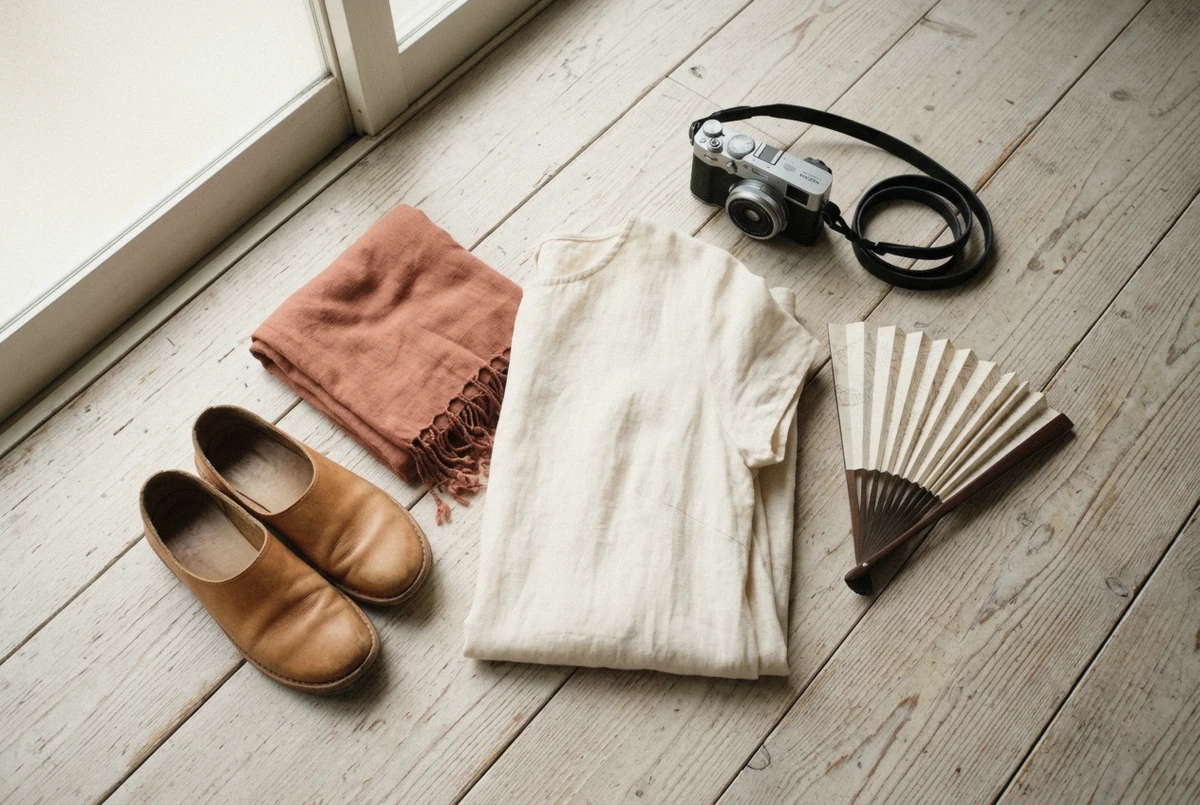
Own clothes in muted, solid colors work for most sessions, or skip the decision entirely and book a session that supplies a kimono, which is the single biggest wardrobe simplification available. Either way, bring shoes you can actually walk in on stone, since kimono sandals are not built for Sannenzaka's slope.
Key takeaways
- Kimono rental sessions supply the full outfit, hair and accessories; own-clothes sessions leave everything up to you
- Solid earth tones and muted colors photograph best against Kyoto's wood and stone; bright white and busy patterns fight the frame
- The single biggest warning: rented kimono sandals have almost no grip on stone slopes; carry a comfortable pair to switch into between shots
- Kyoto runs hot and humid from May through September; outdoor kimono sessions in that window are a real endurance test
- The season table below covers what to layer month by month, in full
- Kimono rental mechanics, plans, dressing time, the return deadline, live on the full rental guide
Own Clothes or a Rented Kimono: the First Decision
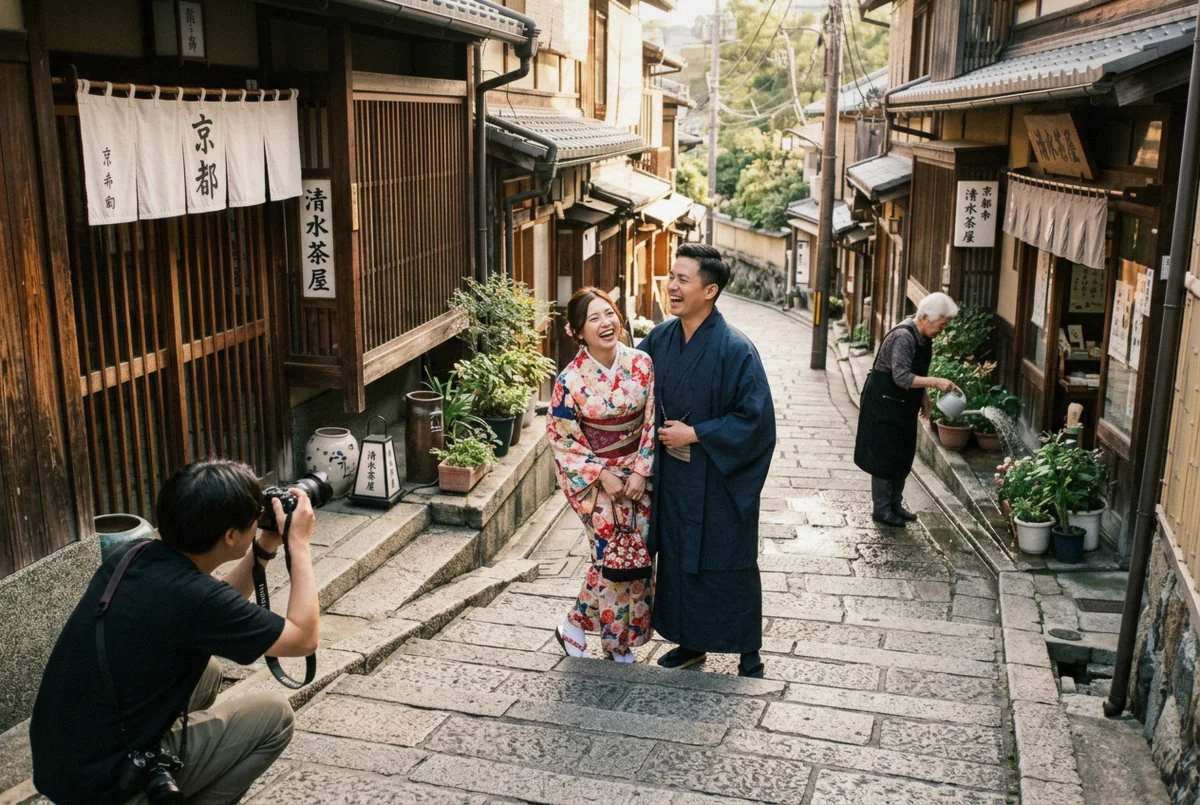
Every session in the catalog splits into one of two wardrobe paths, and it's worth choosing before you think about color or fabric at all. The kimono makeover session and its longer siblings supply the entire outfit: a full dressing session, basic hair styling and all the traditional accessories, sword-shaped fans and small bags included on some packages, bundled with the photoshoot itself. You show up in whatever you're wearing that morning and leave in a kimono for the shoot. It is the simplest way to solve the what-to-wear question completely, and it's also the pricier and slower path: dressing alone runs 45 to 90 minutes before the photographer even arrives.
Sessions like the private photoshoot service or the props session work in your own clothes instead, which means the choices below actually matter for what you pack. The trade-off is speed and cost against the guaranteed period-appropriate look a kimono gives you; own clothes get you shooting within minutes of meeting your photographer, a kimono gets you the photo that reads unmistakably as Kyoto.
Colors and Fabrics That Work Against Kyoto's Backdrop
Kyoto's classic frames are built from warm, muted materials: unpainted wood, aged stone, and the deep vermilion of a shrine gate. Clothing that reads as flat or saturated in a normal city street can either disappear into that backdrop or fight it outright, which is why the color choice matters more here than it would on a beach shoot or a city skyline.
| Color | Good? | Why |
|---|---|---|
| White | Context-dependent | Reads crisp and clean against dark wood facades in the lanes; can blow out and lose detail in strong midday sun |
| Black | Usually good here | Kyoto's wooden buildings and stone paths are dark enough that black clothing doesn't vanish into the frame the way it can on a plain background, and it reads elegant at night sessions like the lit pagoda shoot |
| Earth tones (rust, ochre, sage, terracotta) | Best overall choice | Sit naturally alongside temple wood and stone rather than competing with them; the safest default for most sessions |
| Deep red or burgundy | Good in small doses | Echoes the vermilion of torii gates and shrine architecture without matching it so closely you disappear into a gate in the background |
| Bright neon or fluorescent | Avoid | Reads as jarring and dated against Kyoto's muted palette; pulls the eye away from your face in almost every frame |
| Busy prints or logos | Avoid | Competes with the visual texture already present in wood grain, roof tiles and lattice screens; a photographer has to work around it rather than with it |
| Cotton vs. quick-dry synthetic | Quick-dry wins | Kyoto's humidity from May to September means cotton stays damp and clingy through a session; a quick-dry fabric holds its shape and color better in photos |
Shoes: the Stone-Slope Problem
Footwear is the detail most first-timers get wrong, and it's specific to Kyoto's actual terrain rather than a generic packing-list line. Sannenzaka and Ninenzaka, two of the most-photographed lanes in the district, are stepped stone slopes worn smooth by centuries of foot traffic, and they are genuinely slick, especially after rain. Sneakers and closed-toe shoes with real tread are fine for walking between shooting spots and for boat-deck-style stability on those slopes, but they're the wrong look for a kimono photo. Kimono sandals, geta and zori alike, are built for flat indoor floors, not stone inclines, and one reviewer described walking in the provided sandals on a summer session as a real challenge, adding that other guests had switched into sneakers between shots, which looked out of place in the actual photos but solved the practical problem.
The fix reviewers describe working is simple: wear or carry comfortable, grippy shoes for the walk between locations, and only step into the kimono sandals for the few minutes the camera is actually pointed at you. A good photographer already times this; ask yours about it if it isn't offered. Bare feet work only on the rare soft-sand or tatami setting, not on any stone lane in the district, and unsecured flip-flops or heels are a genuine hazard on the slopes, easy to lose a footing in and a common cause of the twisted ankles Kyoto's own tourism guidance quietly warns about on its etiquette pages.
What to Wear by Season
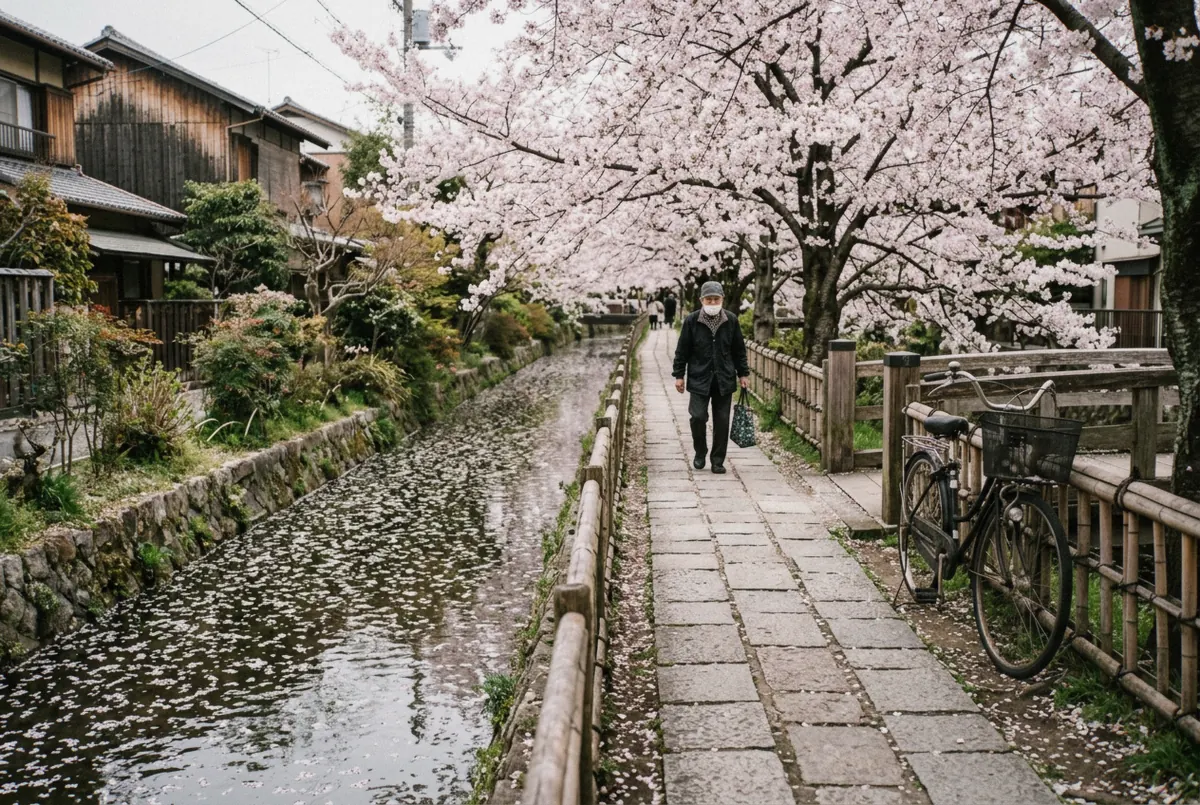
Kyoto's climate swings hard enough between seasons that the same outfit that works beautifully in November will be genuinely uncomfortable in August, and vice versa. Full kimono, in particular, is a layered garment that was never designed with Kyoto's modern summer humidity in mind.
| Season | Wear this | Why |
|---|---|---|
| Spring (late March to May) | Light long sleeves or a mid-weight kimono; a thin cardigan for morning chill | Sakura weeks bring cool mornings that warm quickly; layers you can shed mid-session work best |
| Summer (June to September) | Breathable quick-dry fabrics, or a lighter yukata-style kimono if your session offers one | Kyoto runs hot and humid; outdoor full-kimono sessions become a real endurance test without a lighter option |
| Autumn (October to early December) | A mid-weight jacket or shawl over your outfit, especially for late-afternoon sessions | Days stay mild but temperatures drop fast once the light for foliage shots starts fading |
| Winter (December to February) | A proper coat, hat and gloves layered over your outfit, removed only for the shot itself | Kyoto's winter cold is sharper than its latitude suggests; sessions run brief outdoor bursts between warm-up breaks |
Coordinating Couples and Groups Without Matching
Matching outfits read as costume rather than portrait, and every photographer working these lanes will tell you the same thing: coordinate a palette, not an outfit. Pick two or three colors from the earth-tone and deep-red range above and let each person wear a different piece within that range, one person in rust, another in cream, a third in deep green, rather than putting everyone in the identical shirt. It photographs as a considered, editorial look instead of a matching family portrait from a shopping mall studio.
For couples specifically, one small detail matters more than color: avoid identical patterns, which flatten a two-person frame into a single visual block, but do keep formality level roughly matched, one person in a rented kimono and the other in gym shorts reads as mismatched even if the colors technically coordinate. The kimono couples session solves this by default since both people rent from the same collection and a stylist balances the two looks before the shoot starts.
What Kyoto Sessions Provide, So You Don't Overpack
The wardrobe question changes completely depending on which listing you book, so it's worth checking a session's actual inclusions before you pack around an assumption.
| Item | Usually provided | Bring your own | Notes |
|---|---|---|---|
| Kimono, sash and accessories | Yes, on kimono sessions | Own-clothes sessions: no | The kimono makeover session bundles a full dressing session and accessories in its price |
| Hair styling | Yes, on most kimono sessions | Own-clothes sessions: style it yourself beforehand | Basic styling is standard; formal upgrades cost extra on some listings |
| Kimono sandals (geta/zori) | Yes, with the kimono rental | A grippy backup pair for the stone lanes | See the stone-slope section above; sandals fit the outfit, not the terrain |
| Props (umbrella, fan, small bag) | Yes, on select sessions | Nothing extra needed | The props session supplies free props as its main differentiator |
| Samurai armor and weapons | Yes, in full | Nothing; armor is fitted on site | The samurai walk and studio session both provide complete armor sets |
| Everyday walking clothes | No | Yes, always | Own-clothes sessions rely entirely on what you bring; see the colors table above |
| Weather protection (umbrella for rain) | Rarely stated | A compact umbrella or light rain jacket | Most listings don't state a rain policy; check the operator's cancellation terms instead |
| Makeup | Optional add-on on some kimono sessions | Your own, if you skip the add-on | Listed as an extra rather than included on most kimono packages |
What to Bring
A short, practical list covers what actually gets forgotten, based on the real friction points reviewers and operators mention most.
- Comfortable, grippy shoes to switch into between shots on Sannenzaka and Ninenzaka
- A light layer (cardigan, shawl or jacket) even in warm months, for shaded lanes and early starts
- A small bag or clutch, since most outfits, especially kimono, have no real pockets
- A portable fan in summer, both for comfort and as an on-camera prop that photographs well
- Cash in small bills, since some rental shops and lane-side stalls don't take cards
- A backup hair tie or clip if your session includes an outdoor walk after the shoot
- Sunscreen applied before you arrive, since reapplying over styled hair and makeup mid-session is awkward
- A printed or saved confirmation of your booking and meeting point, since some studios sit down unmarked side streets
What Not to Wear or Bring
A few items work against you specifically in Kyoto rather than being generic travel-blog caution. Heavy cotton that soaks through in summer humidity and stays damp for the rest of the day is the biggest one; it also loses its shape in photos far faster than a synthetic blend does. Statement jewelry that clatters or catches on a kimono sleeve is a second: several rental listings note that dressing staff will ask you to remove large rings or bracelets before tying the obi, since they can snag the fabric.
Leave heels and unsecured flip-flops out of the bag entirely; they're a genuine fall risk on the stone slopes, not just an aesthetic mismatch. And skip bringing your own elaborate hair accessories to a kimono session specifically: most rental packages include coordinated hairpieces chosen to match your outfit, and combining your own with theirs tends to look cluttered rather than intentional.
What Should You Actually Wear?
If you want the photos to say Kyoto at a glance
rent a kimono and let the shop dress you, then book a session that starts at the rental shop door. How rental works
If you want to look like yourself in five years
wear your own clothes in one solid mid-tone, and keep the logos and slogans at the hotel
If you are shooting between May and September
choose linen or cotton over anything structured, and pick the earliest slot the listing offers before the heat builds
If you are shooting the Higashiyama stone slopes
carry your own comfortable shoes and switch into the pretty ones only for the close-up frames
If you are a couple or a group
agree one shared color family and let everyone vary within it, rather than matching outfits exactly
What to Wear for a Kyoto Photoshoot: More Questions
Can I wear jeans for a Kyoto photoshoot?
It's usually not the best choice. Denim doesn't dry quickly if you're caught in a shower, restricts movement for the kind of walking poses these sessions favor, and reads visually heavy against Kyoto's lighter, textured backdrops. A quick-dry trouser or midi skirt in a muted color photographs better.
Can I wear shorts?
Yes, generally, with one caveat: stick to a quick-dry fabric rather than cotton, and check ahead if your session includes a shrine or temple stop, since some sites expect knee coverage inside the grounds even though the public lanes outside have no such rule.
Do I need water shoes or special footwear?
Not water shoes specifically, but grippy, comfortable closed shoes matter more here than most destinations. See the stone-slope section above for the full reasoning and the reviewers' own workaround.
Is a rented kimono hot in summer?
Yes, genuinely. Kyoto's humidity from May through September makes a full traditional kimono a real endurance test outdoors; ask if your session offers a lighter yukata-style option for summer bookings.
Can I wear glasses during a kimono photoshoot?
Generally yes; nothing in the catalog's listings restricts glasses. If you're self-conscious about glare, ask your photographer to angle you slightly off-camera rather than removing them for the whole session.
How does kimono rental actually work: sizing, timing, what's included?
That's covered in full on the dedicated kimono rental guide, including sizing ranges, dressing time and the same-day return deadline most shops enforce.
Do Gion's photography rules affect what I can wear or where I can shoot in a kimono?
No, wardrobe isn't restricted by the lane rules. The full Gion photography rules cover which streets are open, which is a separate question from what to wear on them.
Are there colors to avoid wearing in Japan?
Nothing is taboo for a visitor, but two choices work against you in Kyoto specifically. All-black disappears against the dark wooden machiya facades that make up most backdrops here, and pure white blows out in the bright open light at Fushimi Inari and Heian Shrine. The color guide above lists what holds up instead. The one genuine convention is at funerals, which is not a situation any photoshoot puts you in.
Is it okay to wear a kimono in Japan as a foreigner?
Yes. Kyoto's rental shops dress overseas visitors every day and will get the details right for you, starting with the collar, left over right. The plans, sizes and deadlines live on the kimono rental guide.