 Kyoto Photoshoot
Planning a Kyoto Proposal Photoshoot
A kyoto proposal photoshoot lives or dies on logistics, not on the ring. The spots are already public knowledge; what nobody writes up is how a photographer knows the exact second to start shooting without tipping off the one person who isn't supposed to know, or which of these lanes actually gives you a private-enough moment among crowds of strangers with their own cameras out. This page covers the mechanics: the signal, the meeting point, the timing against crowds, and which of the couple and proposal sessions in Kyoto are actually built for the moment rather than just a scenic backdrop.
Quick answer
The lit Yasaka Pagoda after dark and Gion's Shirakawa canal before 9am are the two realistic options for a proposal with genuine privacy in Kyoto; Fushimi Inari and the bamboo grove look better in photos but are rarely private unless you're there at first light. A proposal-suited session runs from about $53 per person for a straightforward walk to $128 priced per group for a longer kimono day, and the photographer's real job is starting the shutter before you kneel, not after.
Key takeaways
- Night is the most reliable privacy window: the lit pagoda session runs 10 to 60 minutes and takes groups up to 6, well after the day-trip crowds have left
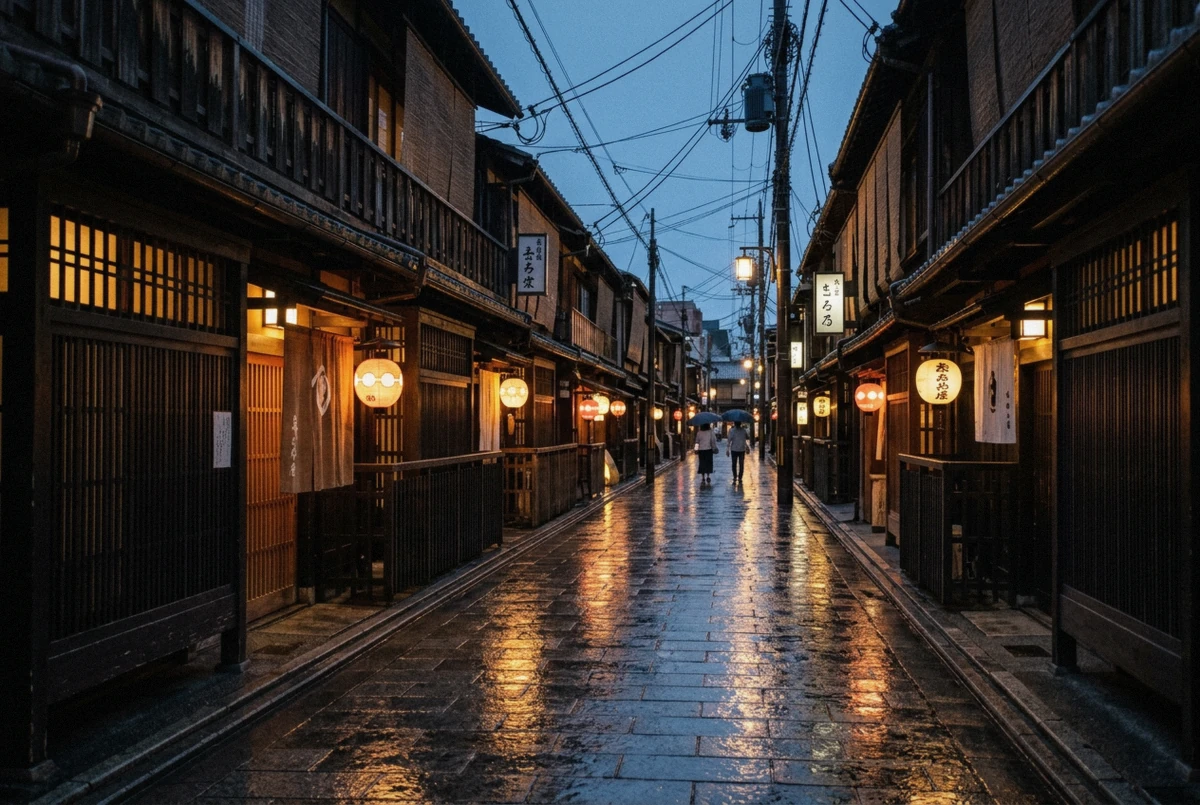
- Gion's private side-lanes are closed to photography entirely; a proposal shoot has to work the permitted public streets, which is one more reason the Shirakawa canal and Hanamikoji beat the side-lanes for staging
- A dedicated concierge proposal service prices from $325, more than double this catalogue's most expensive relevant session
- There's no published rain-specific reschedule policy beyond the standard 24-hour free cancellation window most listings carry, so build in a backup day rather than assume weather flexibility
- Kyoto's photo spot map marks exactly which frames work after dark and which are dawn-only, worth checking before you pick a proposal window
- The simplest cover story is also the true one: telling your partner you booked a couple's photoshoot in Kyoto is not a lie, it's literally what you booked
Which Spots Actually Work for a Proposal
The famous frames and the private frames are not the same list. Fushimi Inari's torii tunnels and the Arashiyama bamboo grove photograph beautifully, but both are open, popular and crowded by mid-morning, which means your proposal shares the lane with strangers' phones the moment it happens. The full photo spot map covers all 24 locations with their walk times and best light, but for a proposal specifically, two things matter more than the frame itself: how few other people are actually standing there, and whether the spot is enclosed enough that a kneel doesn't happen in the middle of foot traffic.
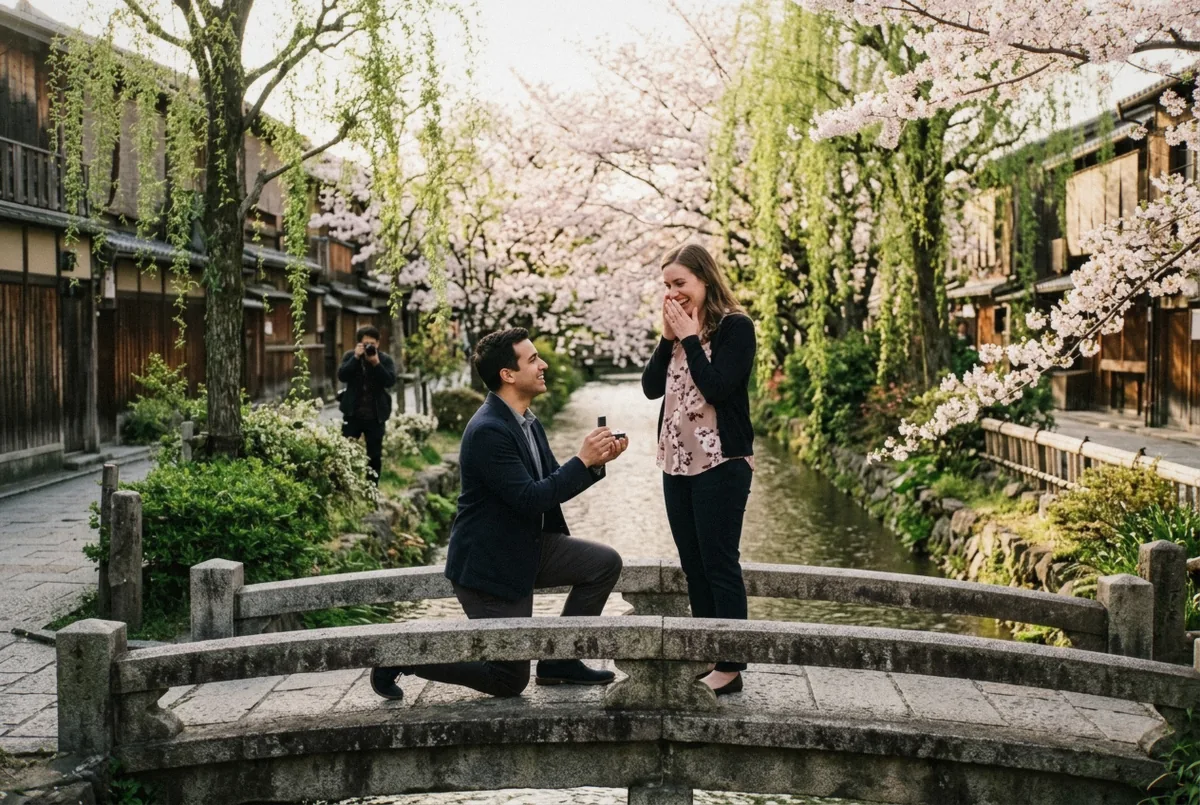
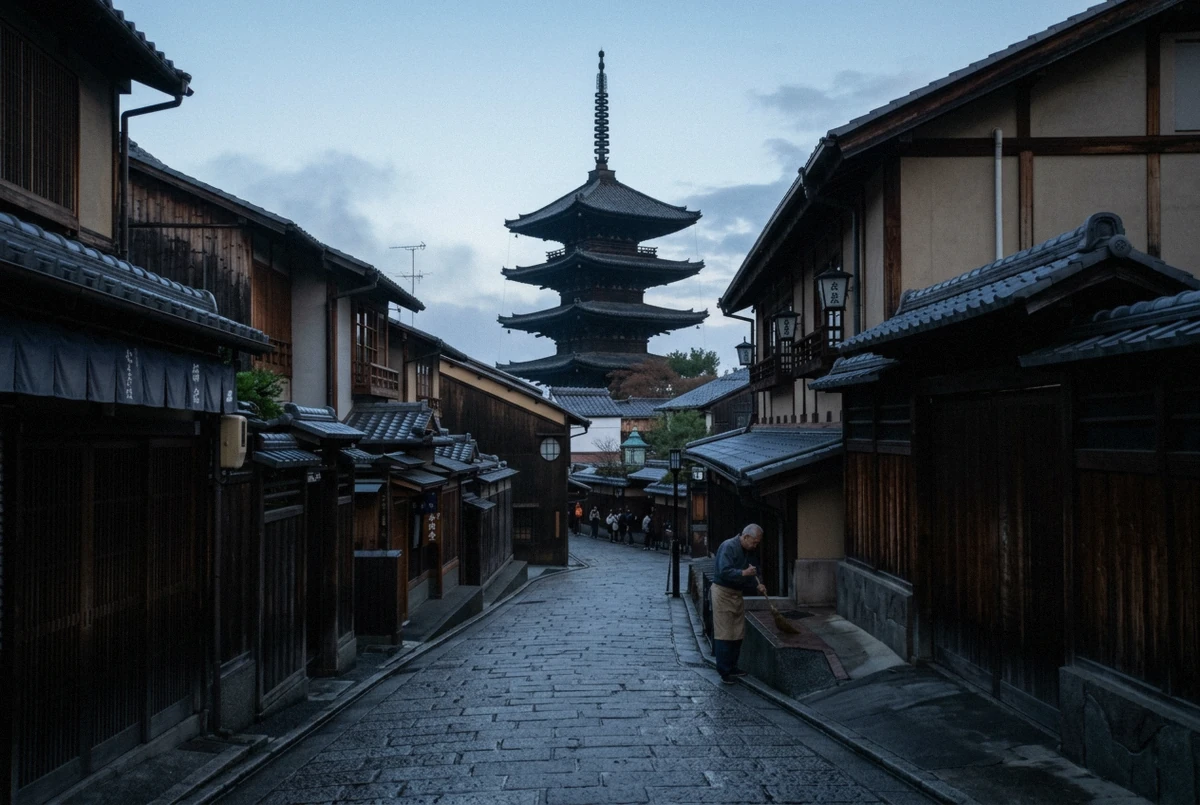
By that measure, the Yasaka Pagoda after dark is the strongest single option in the catalogue. Daytime, the stone lane below it is a queue; after the day-trippers clear out, the same lane is floodlit, empty and yours for as long as the booked slot runs. Gion's Shirakawa canal and Tatsumi Bridge are the daytime alternative: fifty metres of willow-lined canal that photographs well and, checked before 9am, is genuinely quiet rather than merely photogenic. Maruyama Park, reached on foot from Gion, adds a third option during the two sakura weeks each spring, when the park's weeping cherry draws people at midday but sits nearly empty at opening.
What this rules out, gently: don't plan a proposal around Fushimi Inari's lower torii gates or the bamboo grove's main path unless you are there before 8am, since both fill in fast and neither offers real privacy once they do.
| Spot | Real privacy window | Why it works for a proposal |
|---|---|---|
| Yasaka Pagoda (lit at night) | After dark, once day-trippers leave | Floodlit backdrop on an otherwise empty lane; the night session is built for this exact window |
| Shirakawa canal & Tatsumi Bridge, Gion | Before roughly 9am | Public street, so it's fully permitted, and genuinely quiet before the day's foot traffic starts |
| Maruyama Park | Opening hour, sakura weeks only | Nearly empty at opening even during the two peak spring weeks; crowds arrive by midday |
| Fushimi Inari upper torii tunnels | Before 8am | Thins out fast past the lower gates, but reachable only if you're there ahead of the day's first tour groups |
The Surprise Logistics: Signal, Meeting Point and Timing
The part nobody writes about is how the mechanics actually work when one person in the group knows what's coming and the other doesn't.
The signal problem
A photographer can't read your mind, so every proposal shoot needs a pre-agreed cue that doesn't sound like a cue to the person being proposed to. The simplest version, used across countless booked shoots, is a specific phrase worked into normal conversation on the walk, something like suggesting you stop at "the spot I mentioned earlier," which reads as ordinary sightseeing chatter to your partner but tells the photographer to switch from casual walking shots to a continuous burst. Photographers who shoot these sessions regularly start the shutter a beat before the kneel, not after it, specifically so the reaction gets captured along with the moment itself.
Meeting-point choreography
Every session in this catalogue confirms one meeting point per booking, and that point doubles as cover. Because the photographer greets you there as a normal client meeting, a partner who has been told "I booked us a couples photoshoot for the trip" has no reason to suspect anything beyond exactly that, largely because it's true. The photographer arriving first and waiting at the agreed spot, camera already out, looks identical for a proposal shoot and an ordinary one.
Timing against crowds
The two privacy windows above (night at the pagoda, before 9am at the canal) exist because Kyoto's foot traffic follows a predictable clock: tour buses arrive from roughly 9:30am and thin out again after dark. Booking inside either window buys you both a better photo and a lower chance of an audience gathering mid-proposal.
Weather backup
No listing in this catalogue publishes a rain-specific proposal guarantee. What they do publish is a standard 24-hour free cancellation window, which functions as your practical backup: if the forecast turns the day before, cancel and rebook rather than assume the operator will offer an automatic reschedule. If your trip allows it, hold a second date in reserve rather than pinning the whole plan on one afternoon.
The ring, physically
Keep the box in an inner jacket pocket rather than a pants pocket, since a kneel on a sloped stone lane is exactly the moment a shallow pocket lets something slide out. Avoid handing your partner a bag or coat to hold right before the moment; it's a common tell, and it also puts the one object you need somewhere you can't reach it.
The cover story
You don't need to invent one. Every session named below is, on paper, a normal couple's photoshoot, so telling your partner exactly that is both true and sufficient. The moment lives entirely inside a booking that would make sense even if nothing happened.
Sessions That Actually Suit a Proposal
Four sessions in the catalogue fit a proposal specifically, for different reasons.
Night Photoshoot at Hōkan-ji Temple (Yasaka Pagoda)
The only after-dark session in the catalogue, and the strongest privacy option on this page. Slots run 10, 30 or 60 minutes, take a private group of up to 6, and the shorter 10-minute plan alone is enough for a proposal sequence if the moment is the whole point rather than a long shoot. See the pagoda session.
Private Photoshoot Service
The catalogue's most-booked and most-reviewed session, priced per person and running 45 minutes to 1.5 hours. Its four starting-location choices include the Shirakawa canal directly, and 30 to 40 edited photos give you a real gallery to choose the proposal frame from rather than a handful of shots. See the private photoshoot.
Private Kimono Experience & Professional Photoshoot
Priced per group rather than per person, and the only proposal-suited session built as a longer format: 2 to 7 hours, with the first hour spent dressing at the Kimono Rental Mimosa shop. This is the pick if the proposal is one moment inside a full day together in kimono, not the entire point of the booking. See the kimono experience.
Private Cherry Blossom Photoshoot
Seasonal only, booked through Gion's streets and Maruyama Park during the late-March-to-mid-April sakura weeks. If your trip lands in that window, it adds a backdrop none of the year-round sessions can offer, though the park itself is only quiet at opening during those weeks. See the cherry blossom session.
Comparing the Four at a Glance
| Session | Length | Group cap | Starting price |
|---|---|---|---|
| Night Yasaka Pagoda | 10 to 60 minutes | Up to 6, private group | $68.98 |
| Private Photoshoot Service | 45 minutes to 1.5 hours | Private, priced per person | $53.30 per person |
| Private Kimono Experience | 2 to 7 hours | Private, priced per group | $127.93 |
| Cherry Blossom Photoshoot | 1 to 1.5 hours (sakura weeks only) | Private, priced per group | $85.28 |
What It Costs
Among the four sessions above, the night pagoda slot at $68.98 and the private photoshoot at $53.30 per person are the two lowest-friction options if the proposal itself, not a long shoot, is the priority. The kimono experience at $127.93 is priced per group rather than per person, which changes the math if more than two people are involved (a proposal with family waiting nearby, for instance). Outside this catalogue, a dedicated concierge proposal photography service prices a comparable session from $325, more than double the most expensive option listed here; the full price ladder across all twelve sessions covers what drives that gap and where the rest of the catalogue lands if none of these four fit your plan.
Which Proposal Session Fits Your Plan
If you want the moment itself to be the entire booking, kept short and private
book the night pagoda session: a 10-minute slot after dark is enough, and nobody else will be in the lane
If you want a daytime proposal with a bigger gallery of photos from before and after
book the private photoshoot service starting at the Shirakawa canal before 9am, when the lane is still quiet
If the proposal is one part of a longer day you're already planning in kimono
book the private kimono experience and treat the moment as one stop inside the full 2-to-7-hour day
If your trip happens to land during the sakura weeks
book the cherry blossom session at Maruyama Park's opening hour, before the crowds arrive for the day
Kyoto Proposal Photoshoot: Common Questions
How does the photographer know when to start shooting without ruining the surprise?
Through a pre-agreed signal worked into ordinary conversation, most often a specific phrase that sounds like normal sightseeing chat but tells the photographer to switch to a continuous burst. The photographer starts a beat before the kneel, not after, so the reaction is captured too.
What if it rains on our proposal day?
No listing publishes a rain-specific proposal guarantee. The practical backup is the standard 24-hour free cancellation window most sessions carry: cancel and rebook if the forecast turns, and hold a second date in reserve if your trip allows it.
Can we book the pagoda session for just a few minutes?
Yes. The shortest plan on the night pagoda session runs 10 minutes and includes 20 edited photos, enough for a proposal sequence without booking a longer shoot you don't need.
Do we need kimono for a proposal shoot?
No. Both the night pagoda session and the private photoshoot service work in your own clothes. Kimono is only relevant if you're booking the private kimono experience specifically for the longer, dressed-up version of the day.
How far in advance should we book a Kyoto proposal photoshoot?
Bookings on this catalogue confirm within 24 hours of cancellation deadlines, so a booking made a few days ahead is generally workable, though sakura-week and evening slots fill first. Book as soon as your Kyoto dates are fixed rather than waiting until you land.
Should we tell the photographer it's a proposal?
Telling the operator in advance lets them plan the signal and the closing sequence around the moment rather than treating it as a normal walking shoot; several operators explicitly welcome this in their listings, since it changes how they frame the final minutes of the session.
Is Gion's private side-lanes off-limits for a proposal shoot?
Yes. Photography is banned on Gion's private side-lanes with posted fines, so a proposal shoot works the permitted public streets, Hanamikoji and the Shirakawa canal, instead. That restriction doesn't meaningfully limit your options since those public streets are the better proposal spots anyway.