 Kyoto Photoshoot
What to Expect on a Kyoto Photoshoot
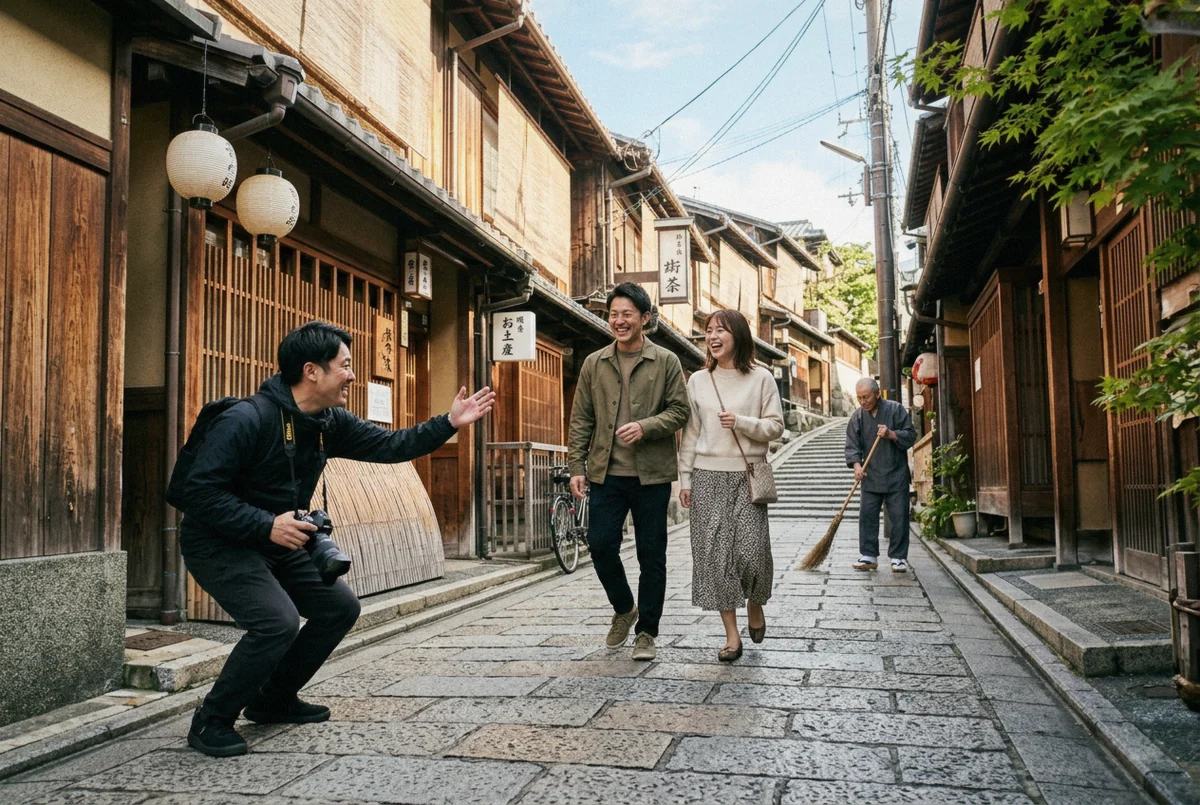
Most people who search what to expect kyoto photoshoot are not worried about safety or logistics. They are worried about looking stiff, not knowing where to put their hands, and being photographed by a stranger in a country they have never visited before. That worry is well documented in the reviews private photographers in Kyoto publish themselves: guests describe arriving nervous, unsure they photograph well, or flatly calling themselves an awkward subject. What follows is the actual sequence of a session, drawn from those same listings, so nothing on the day is a surprise.
Quick answer
A Kyoto photoshoot runs anywhere from 10 minutes to a full day depending on the package, and every one of them is built around a photographer who directs your pose start to finish, not a camera pointed at someone standing stiffly. You do not need any posing experience; several of the site's own reviewers describe arriving nervous or self-described as awkward and getting comfortable within the first few frames.
Key takeaways
- No posing skill is assumed anywhere in the catalogue: the photographer gives pose direction on every listed session, from the most-booked private shoot to the cheapest kimono package
- Sessions range from a 10-minute pagoda slot to a full day in kimono; the shorter the booking, the less time you'll spend adjusting to the camera before it ends
- Kimono packages add 45 to 90 minutes of dressing before the photographer even arrives, so budget the whole first hour of a kimono morning for that alone
- Delivery ranges from edited photos the same day to about 10 days on the slowest listing; nobody hands you prints on the spot
- If cameras genuinely make you tense, the props session gives you something to hold and look at instead of the lens
- The single biggest fix for feeling awkward on camera is direction, not confidence: reviewers who called themselves stiff credit the photographer's guidance, not their own posing
A Kyoto Photoshoot, Start to Finish
The packages differ in length and location, but the shape of the session is the same everywhere from a 10-minute pagoda slot to a six-hour Gion booking. This is that shape, stage by stage.
-
Before you arrive
The meeting point, not an address
Bookings confirm a meeting point rather than a street address: a shop entrance, a station exit, or, for the night pagoda session, the front of a specific coffee stand. Some listings note that arriving late risks losing the slot entirely, so read the confirmation the night before, not the morning of.
-
First 5 to 10 minutes
Meeting the photographer and warm-up frames
Most sessions open with a short explanation of where you're walking and a handful of loose test frames before anything is treated as a final shot. This is the part reviewers describe as the moment nerves actually settle, not the middle of the session.
-
The bulk of the booking
The walk between two to four spots
A 45-minute to 1.5-hour session (the catalogue's most common length) typically moves between two or three backdrops on foot; a full-day kimono booking covers more ground with breaks built in. The photographer sets the route and the pace, so you are following, not planning.
-
The last 10 to 15 minutes
The closing sequence
Sessions end at whichever spot gives the strongest light or the most photogenic backdrop of the route, often the same pagoda or canal shot that sold you on booking in the first place. This is usually where the highest number of usable frames come from.
-
24 hours to about 10 days after
Delivery
Several operators send unedited originals within 24 hours and a smaller edited set on a similar timeline; one listing states delivery within about 10 days as its outer bound. None deliver anything printed or edited on the spot.
How Photographers Direct People Who Freeze
Every session in this catalogue is built around active direction, not a photographer waiting for you to strike a pose on your own. That distinction shows up directly in the reviews guests leave afterward. One traveller booking the props session wrote that she is "not always the easiest person to photograph" and that her photographer "quickly found a way to make me feel comfortable" within the walk. Another, on a kimono session, described herself outright as "an awkward person" and said the photographer "helped me... with poses" through the whole route. A third guest called herself "extremely nervous" going in and said "every part was relaxed and straightforward" once the session started. A fourth wrote that she and her partner "felt quite stiff in front of the camera" and that the photographer "guided us really well and made us feel comfortable during the photoshoot."
The pattern across all four is the same: nobody arrived confident, and none of them needed to. What actually happens when you freeze is that the photographer gives you something concrete to do instead of a vague instruction to "look natural," which is the instruction that makes most people tense up in the first place. That might mean a specific small action (look at your partner's hands, take one step and stop, adjust the kimono sleeve) rather than an expression to perform. Several listings describe candid, walking shots interspersed with posed ones for exactly this reason: moving between spots gives you something to do with your body that isn't standing and smiling on command.
Posing That Actually Works in Kyoto's Lanes
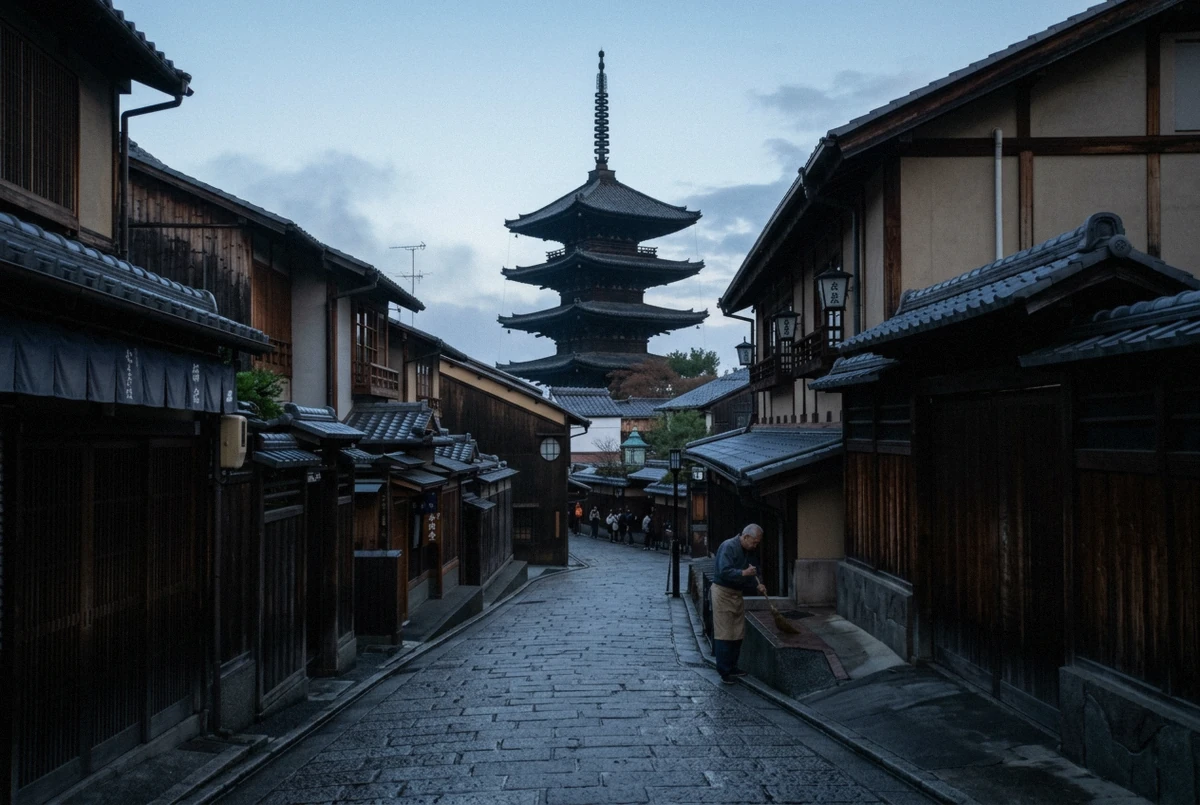
Generic posing advice mostly assumes a flat studio floor. Kyoto's best-known backdrops are sloped stone lanes, and that changes what actually reads well in a photo. On a lane like Sannenzaka, standing square to the camera on an incline tends to look tilted; angling your body slightly downhill and letting one foot lead reads more natural and is also just easier to hold still in. The full spot-by-spot map covers which lanes slope and which are flat, but the posing fix is the same everywhere the ground isn't level: let your back foot take the incline, don't fight it by standing perfectly upright.
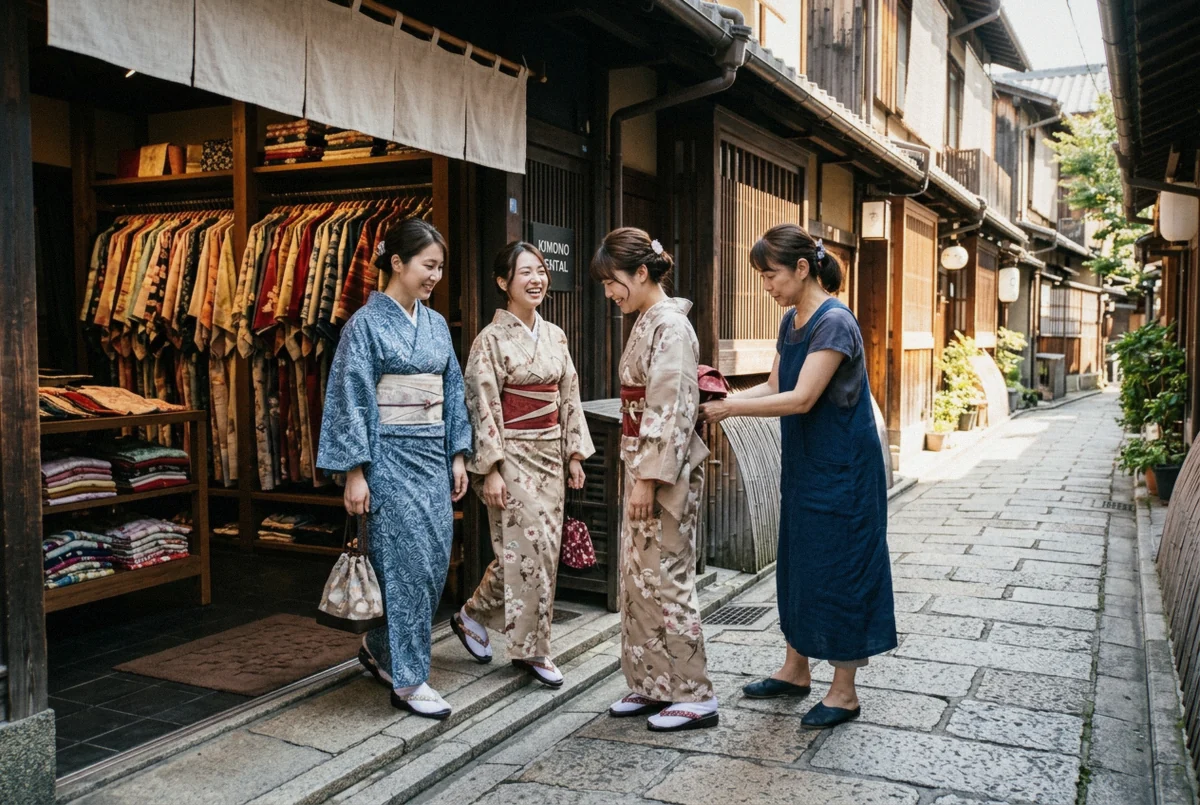
A kimono changes your stride before it changes anything about your face. The garment restricts how far you can step, so a normal walking pace in daily clothes will pull the kimono open at the hem if you try it in silk. Photographers who shoot kimono sessions daily direct smaller steps for exactly this reason, and several kimono listings note the wooden zori or okobo sandals are not built for a confident stride either. If a photographer asks you to take a smaller step than feels natural, that is the kimono working correctly, not you walking oddly.
Narrow alleys solve one problem and cause another. They compress the background nicely and block out crowds, but they also leave you with less room to angle away from the camera, which is usually where people default when they feel awkward. In a two-metre-wide alley like the ones around Gion's Shirakawa canal, the fix is smaller gestures rather than a smaller body angle: half-turn at the shoulders instead of the whole torso, since there isn't physical space for a bigger pivot.
Hands are the detail nobody prepares for and everybody worries about once the camera comes out. The simplest fix that shows up across the reviews is having something to hold: a kimono sleeve, a paper parasol, a partner's hand, or the props supplied on the props session specifically for this reason. Empty hands with nothing to do are what read as stiff in photos, not an unconfident face. If a photographer hasn't handed you a prop and you're still unsure what to do with your hands, resting one loosely at your side and the other on a railing, a sleeve or a companion's arm reads more natural in a still frame than crossing your arms or clasping them in front of you, which tends to compress the shoulders and read as guarded rather than relaxed.
What You Bring, What the Photographer Brings
Nothing in this catalogue requires you to show up with equipment. The split below is what's genuinely on you versus what's already covered.
| You bring | The photographer brings |
|---|---|
| Comfortable, weather-appropriate shoes (not new ones you haven't broken in) | The camera, lenses, and any lighting the session's listing describes |
| A willingness to follow small, specific direction rather than pose on your own | Knowledge of which backdrop works at what hour, and the route between them |
| Your own phone if you want casual behind-the-scenes shots between setups | Posing direction for hands, stance and expression, adjusted to the location |
| The kimono itself only if you booked it separately; most photoshoot-only sessions don't include it | For kimono packages, the garment and dressing via the operator's partner shop |
| Patience for the dressing block on kimono mornings; it runs 45 to 90 minutes before the shoot starts | A pre-agreed shot list or route so the walk between spots isn't improvised on the day |
How Your Photos Actually Arrive
Delivery is the one part of "what to expect" that varies most between listings, and it's worth checking before you book if you need photos back before you fly home. On the fast end, several operators send every unedited original within 24 hours of the session, with a smaller batch of professionally edited photos following on a similar timeline once you've picked your favorites. On the slow end, one listing states delivery within about 10 days as its published outer bound, which is fine if you're still travelling but tight if your trip ends sooner.
Most deliveries arrive as a private online gallery or a Google Drive link rather than anything printed. Galleries typically stay live for a couple of weeks, long enough to download everything but not indefinitely, so treat the delivery email as something to act on within the trip, not after you're home. Download the full-resolution files to your phone or laptop before that window closes rather than relying on a bookmark you might not open again until the gallery has already expired.
| Typical delivery window | What you get |
|---|---|
| Within 24 hours | All unedited original photos on several sessions, plus a smaller edited set on a similar or next-day timeline |
| 2 to 3 days | A curated set of professionally edited photos, typically 30 to 40 images, via a shared drive link |
| About 1 week | Edited photos by email and drive link on the night pagoda session, in batches of 20 to 50 depending on the plan booked |
| Up to about 10 days | The slowest published turnaround in the catalogue, for a townhouse studio session's edited gallery |
Which Session Fits How You Feel About the Camera
If cameras genuinely make you tense and you want the most-tested option
book the private photoshoot service: it's the catalogue's most-reviewed session, with 198 reviews describing exactly the direction-fixes-nerves pattern above
If you'd rather have something to hold than pose empty-handed
the props session hands you a parasol, a fan or another prop specifically so your hands have a job during the shoot
If you want kimono but you're worried about adding a whole extra layer of unfamiliarity
the kimono makeover is the catalogue's cheapest kimono option and bundles the dressing, the guide and the shoot into one straightforward booking
If you'd rather skip the crowd anxiety entirely
book an early morning slot; several operators recommend an 8 to 11am start in spring and autumn specifically so you're not posing in front of a queue of onlookers
What to Expect: Common Questions
How early should I arrive for a Kyoto photoshoot?
Arrive at the stated meeting point on time rather than early; some listings warn that lateness can forfeit the slot entirely, particularly on the shorter night sessions. If you've booked kimono dressing beforehand, budget the full 45 to 90 minutes for that separately, since it happens before the photographer's meeting time, not as part of it.
What if I genuinely don't know how to pose?
That's the default assumption every session is built around, not an exception. The photographer gives specific, small direction throughout, which is exactly what the reviewers quoted above describe fixing their own nerves and stiffness. You are not expected to arrive with any posing knowledge.
Can I wear my own clothes instead of a kimono?
Yes. Photoshoot-only sessions like the private photoshoot service or the props session don't include or require kimono at all; you shoot in whatever you're wearing. Kimono is only part of the sessions that specifically bundle it.
What happens if I still look stiff in some of the photos?
Most sessions deliver either a large batch of originals or let you choose which frames get professionally edited, so a few stiff shots in the mix don't define the delivered set. Sessions with a bigger photo haul, like the props session's 100+ photos per hour, give you more to choose from if a chunk of the early frames feel awkward.
Do I need to bring my own camera or GoPro?
No. Every session in this catalogue includes the photographer's own equipment; bringing a personal camera is only useful if you want casual shots between the professional ones, not a requirement for the booking itself.
How soon will I actually see my photos?
It depends entirely on the package. Several sessions send unedited originals within 24 hours and edited picks shortly after; the slowest listing on the site states about 10 days as its outer bound. Check the specific tour page's delivery time before booking if your trip ends soon.
Is a Kyoto photoshoot awkward if I'm travelling solo?
The direction described throughout this page applies the same way to a solo booking as to a couple or family one; the photographer is guiding one subject rather than coordinating a group, which several listings note as actually simpler to shoot.
What are the etiquette rules for taking photos during a session in Japan?
Your photographer carries most of them, but four are worth knowing so nothing stalls the shoot. Signs win: a crossed-out camera means no photography even where it looks harmless, and Kyoto posts them on private lanes and inside many temple halls. People in frame need consent if they are recognisable and the shot is about them, which is why sessions work wide streets rather than doorways. Residential lanes are somebody's front step, so a session keeps moving and never blocks a path. And tripods are the real flashpoint rather than cameras, which is why photographers handhold in the lanes and save the tripod for the riverbank or a night frame. The full rule set, including where the bans actually bite, sits on its own page.