 Kyoto Photoshoot
Kyoto Photo Spots: the Map, the Light, and Which Session Goes Where
Every guide to Kyoto photo spots prints the same ten names and leaves out the two things that decide your photos: what time the light works, and whether anyone will actually take you there. This page fixes both. All 24 spots below sit on one interactive map, each with verified coordinates, the walk from the nearest station, the hour it photographs best, and the photoshoot packages that shoot there, joined from the operators' own listings, not guessed.
Quick answer
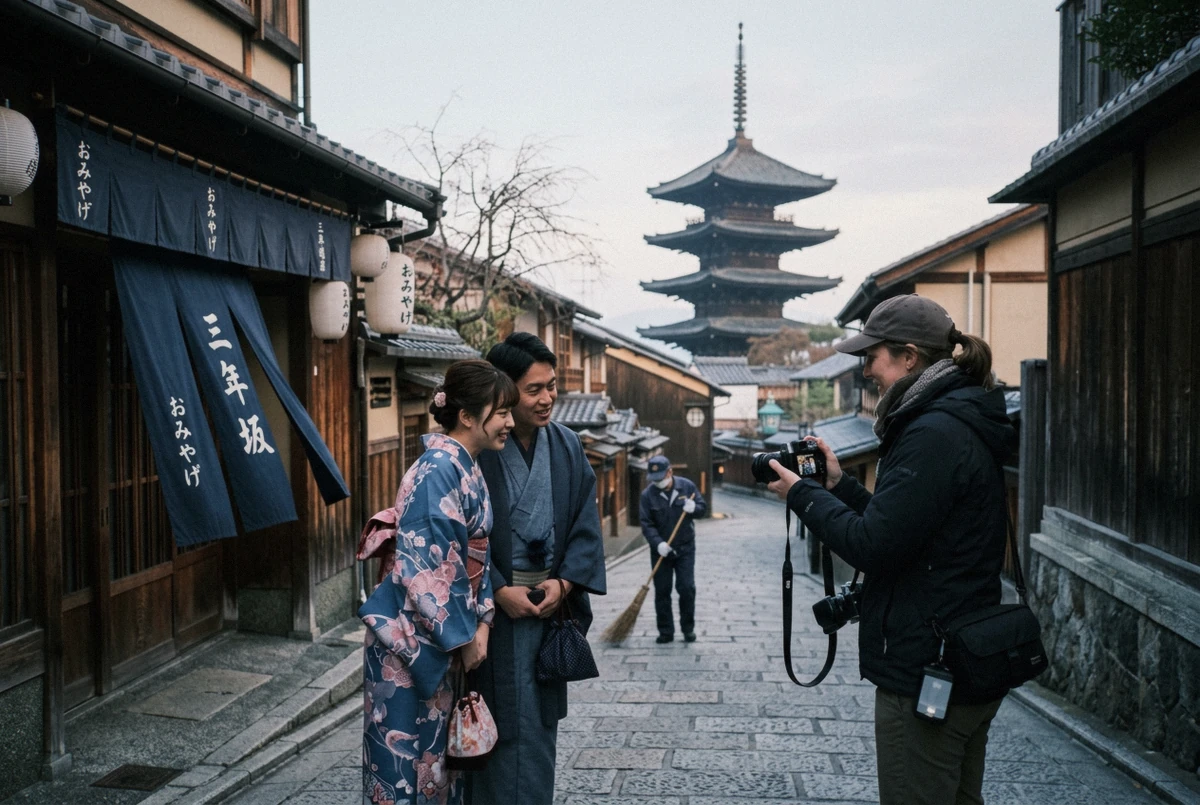
The famous Kyoto photo spots cluster into three walkable zones: the Higashiyama lanes under the Yasaka Pagoda, Gion's teahouse streets around Tatsumi Bridge, and Arashiyama's bamboo grove, plus two outliers worth the train ride, Fushimi Inari's torii tunnels and the Golden Pavilion. The pattern that matters: every one of them is empty at dawn and a queue by 10am, which is why photographers who shoot them daily start sessions as early as 6:30.
Key takeaways
- Higashiyama, Gion and Arashiyama cover 17 of the 24 spots. You can shoot each zone on foot in a morning. Jump to the map
- Best single frame for first-timers is the Yasaka Pagoda from Sannenzaka. The night session has it lit and crowd-free after dark
- Fushimi Inari and the bamboo grove photograph best before 8am; one package lets you pick either as your session backdrop
- Six of the spots are reached by no package at all. Small bubbles on the map. They are yours if you carry your own camera
All 24 Kyoto Photo Spots at a Glance
One row per spot. "On a session" means a bookable photoshoot package names it or works that zone. The join comes from the operators' listings. Full detail on every spot sits under the map.
| Spot | The frame | Best light | From the station | On a session |
|---|---|---|---|---|
| Yasaka Pagoda & Sannenzaka | Five-storey pagoda over a stone lane | Dawn, or lit at night | 12 min from Kiyomizu-Gojo | Yes: 6 packages |
| Ninenzaka | Stepped lane, wooden shopfronts | Dawn to 8am | 13 min from Kiyomizu-Gojo | Yes |
| Kiyomizu-dera | Temple stage over the city | First hour after 6am opening | 20 min uphill walk | Lanes only, not inside |
| Ishibei-koji | Kyoto's most intact stone alley | Soft light, any hour | 5 min from Yasaka Shrine | No package |
| Kodai-ji & Nene-no-michi | Temple walls, lantern path | Late afternoon | 8 min from Gion bus stops | No package |
| Yasaka Shrine | Vermilion gate on Shijo's axis | Dusk, lanterns on | 1 min from Gion bus stop | Passed through, not staged |
| Maruyama Park | Weeping cherry, open lawns | Morning; sakura weeks | 3 min behind Yasaka Shrine | Yes: sakura sessions |
| Hanamikoji Street | Teahouse facades, Gion proper | Early morning or dusk | 5 min from Gion-Shijo | Yes: most Gion sessions |
| Gion Shirakawa & Tatsumi Bridge | Canal, willows, one small bridge | Morning; evening lanterns | 6 min from Gion-Shijo | Yes |
| Pontocho Alley | Lantern-lit alley, two metres wide | Blue hour into night | 2 min from Sanjo/Kawaramachi | Yes |
| Kamo River at Sanjo | Riverbank, bridges, city light | Golden hour | At Sanjo Bridge | Yes: the samurai walk |
| Arashiyama Bamboo Grove | Green stalks closing overhead | Before 8am, striped light | 3 min from Randen Arashiyama | Yes |
| Togetsukyo Bridge | Wooden bridge, river, hills | Morning mist; autumn color | 5 min from Randen Arashiyama | Yes |
| Kimono Forest | 600 lit kimono-fabric pillars | Dusk: they switch on | Inside Randen Arashiyama | Yes |
| Tenryu-ji Garden | Pond garden, borrowed mountains | Morning, gates at 8:30 | 2 min from Randen Arashiyama | No package |
| Nonomiya Shrine | Black torii in the bamboo | Early morning | On the grove path | No package |
| Fushimi Inari | Ten thousand torii in tunnels | Dawn, or climb higher | 1 min from JR Inari | Yes |
| Kinkaku-ji | Gold pavilion on its pond | Morning sun on the gold | Bus 204/205, Kinkakuji-michi | No package |
| Ginkaku-ji | Silver Pavilion, sand garden | Morning, 8:30 opening | Bus 5/17, Ginkakuji-michi | No package |
| Philosopher's Path | Canal under a cherry tunnel | Sakura weeks, any morning | Runs Ginkaku-ji to Nanzen-ji | No package |
| Nanzen-ji Aqueduct | Brick arches, film favourite | Midday shade works here | 10 min from Keage Station | No package |
| Heian Shrine | Giant torii, vermilion courts | Open light, mid-morning | 10 min from Higashiyama Stn | No package |
| To-ji Pagoda | Japan's tallest pagoda | Late light across the pond | 15 min from Kyoto Station | No package |
| Pontocho at night | Same alley, lanterns lit | After dark | 2 min from Sanjo/Kawaramachi | Yes: night slots |
How Much Kyoto Do You Have?
If you have one morning
walk Higashiyama at dawn: Yasaka Pagoda → Sannenzaka → Ninenzaka → Ishibei-koji, done before the buses arrive at 9:30
If you have half a day
add Gion: Hanamikoji, the Shirakawa canal and Tatsumi Bridge, or ride the Randen line out to the bamboo grove instead
If you have a full day
dawn at Fushimi Inari, mid-morning in Arashiyama, golden hour on the Kamo River, blue hour in Pontocho. The hour-by-hour plan below runs exactly this
If you are here for sakura or autumn color
Maruyama Park, the Philosopher's Path and Togetsukyo move to the top of the list; the cherry blossom session books out for those weeks
The Kyoto Photo Spots Map
Bubble size shows how many of the bookable photoshoot packages work each spot. A small grey bubble is a spot the industry skips, which is exactly where you take your own tripod. Filter by anything: a spot, a mood, or a package name. Every card below the map deep-links back to it.
Every Spot, In Detail
Walk times are from the nearest station or bus stop; "time" is what the spot needs once you are standing in it. Package links go to that session's page. Prices and availability are one more click away.
-
Yasaka Pagoda & Sannenzaka
6 of the toursThe five-storey pagoda of Hokan-ji rising over a sloping stone lane. The single most photographed frame in Kyoto, and the anchor of almost every Higashiyama session.
Stops here: Private shoot, $53, Pick your location, $76, Props session, $42, Kimono day, $128, Gion specialist, $85, Night pagoda, $69
-
Ninenzaka
3 of the toursThe gentler, stepped sister lane below Sannenzaka. Wooden shopfronts, paper lanterns and, before 8am, nobody in your frame.
Stops here: Private shoot, $53, Kimono makeover, $29, Gion specialist, $85
-
Kiyomizu-dera
No tourThe great temple stage hanging over the city: a sight worth the climb, but staged photography is restricted on the grounds, so sessions shoot the lanes below instead.
No package shoots inside: the temple restricts commercial photography. Kimono sessions dress you two lanes away and shoot Sannenzaka instead.
-
Ishibei-koji
No tourKyoto's most intact stone-walled alley, fifty quiet metres of it, hiding in plain sight between Nene-no-michi and the Yasaka Shrine approach.
No package names it. Photographers on longer Higashiyama sessions sometimes detour here; ask yours.
-
Kodai-ji & Nene-no-michi
No tourThe lantern-lined walk below Kodai-ji's walls, at its best in late-afternoon light when the tour groups have drained downhill.
No package stages here, but it sits on the natural walking line between the pagoda and Yasaka Shrine.
-
Yasaka Shrine
1 of the toursThe vermilion gate that closes the view down Shijo-dori, and the lantern-hung main hall behind it. Sessions pass through, but staged shoots inside the grounds are kept respectful and brief.
Stops here: Kimono makeover, $29
-
Maruyama Park
3 of the toursThe park behind Yasaka Shrine, ordinary most of the year and the city's sakura stage for two weeks. Its weeping cherry is the most photographed tree in Kyoto.
Stops here: Private shoot, $53, Kimono day, $128, Cherry blossom, $85
-
Hanamikoji Street
6 of the toursGion's main teahouse street: machiya facades, discreet doorways and the texture that says Kyoto in one frame; the public street is fine to shoot, the private side-lanes are not.
Stops here: Private shoot, $53, Pick your location, $76, Props session, $42, Kimono makeover, $29, Gion specialist, $85, Cherry blossom, $85
-
Gion Shirakawa & Tatsumi Bridge
2 of the toursA willow-hung canal, stone paving and one small bridge that carries half the engagement shoots in the city. The prettiest hundred metres in Gion.
Stops here: Private shoot, $53, Cherry blossom, $85
-
Pontocho Alley
1 of the toursA two-metre-wide alley of lanterns and restaurant doorways running along the Kamo River. Flat, soft light by day and pure atmosphere once the lanterns come on.
Stops here: Private shoot, $53
-
Kamo River at Sanjo Bridge
1 of the toursThe riverbank where Kyoto comes to sit in the evening. Open light, the bridge lines, and enough space that a photoshoot bothers no one.
Stops here: Samurai walk, $93
-
Arashiyama Bamboo Grove
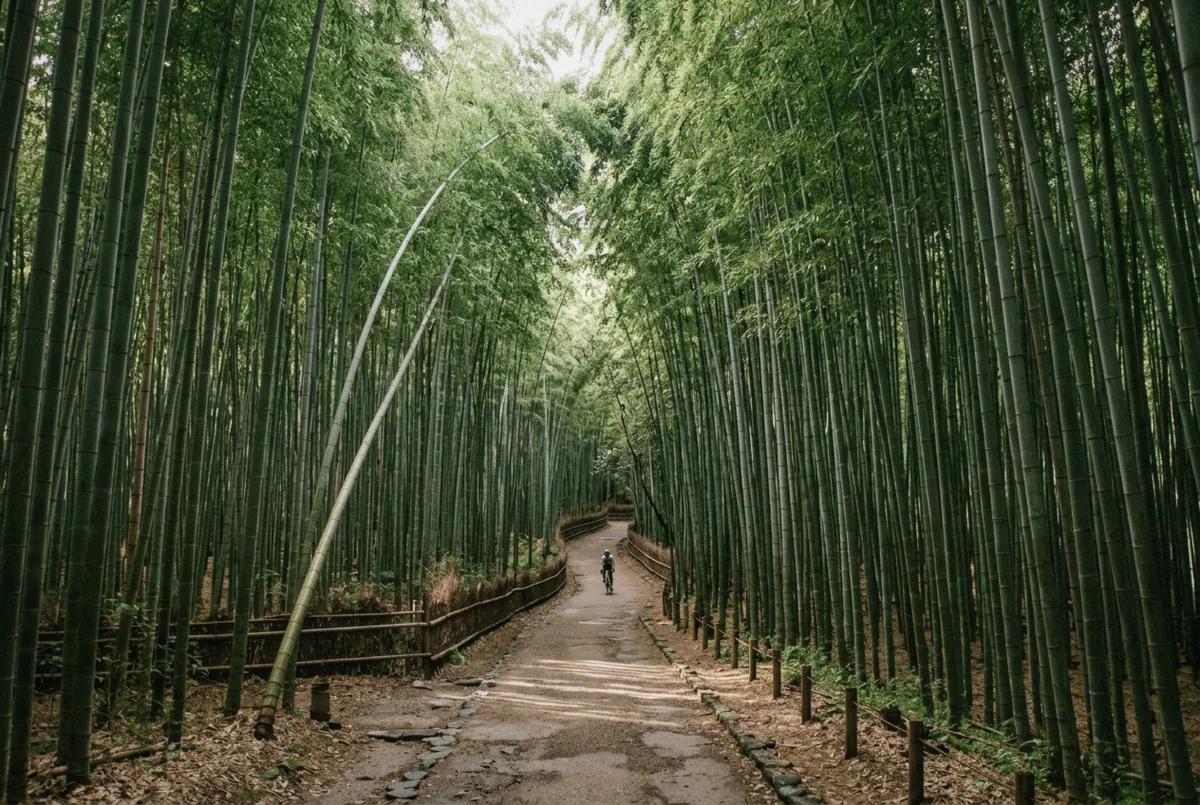
2 of the toursThe corridor of green stalks that filters morning sun into stripes. Flattering light that photographers plan whole sessions around, and a crowd crush from 9am.
Stops here: Pick your location, $76, Arashiyama shoot, $85
-
Togetsukyo Bridge
1 of the toursThe wooden-railed bridge over the Katsura River with the Arashiyama hills stacked behind. Morning mist in cool months, full color in November.
Stops here: Arashiyama shoot, $85
-
Kimono Forest
1 of the toursSix hundred acrylic pillars wrapped in kimono fabric inside Randen Arashiyama Station. They light up at dusk and cost nothing to shoot.
Stops here: Arashiyama shoot, $85
-
Tenryu-ji Garden
No tourA 14th-century pond garden that borrows the Arashiyama hills as its backdrop. The classic composition is across the pond from the abbot's hall.
No package shoots inside the paid garden. Sessions work the bamboo grove that starts at its north gate.
-
Nonomiya Shrine
No tourA small shrine with a rare black-wood torii sitting right on the bamboo-grove path. A two-minute detour that most people walk straight past.
No package stages here: shrine forecourt, keep it quick and respectful.
-
Fushimi Inari Taisha
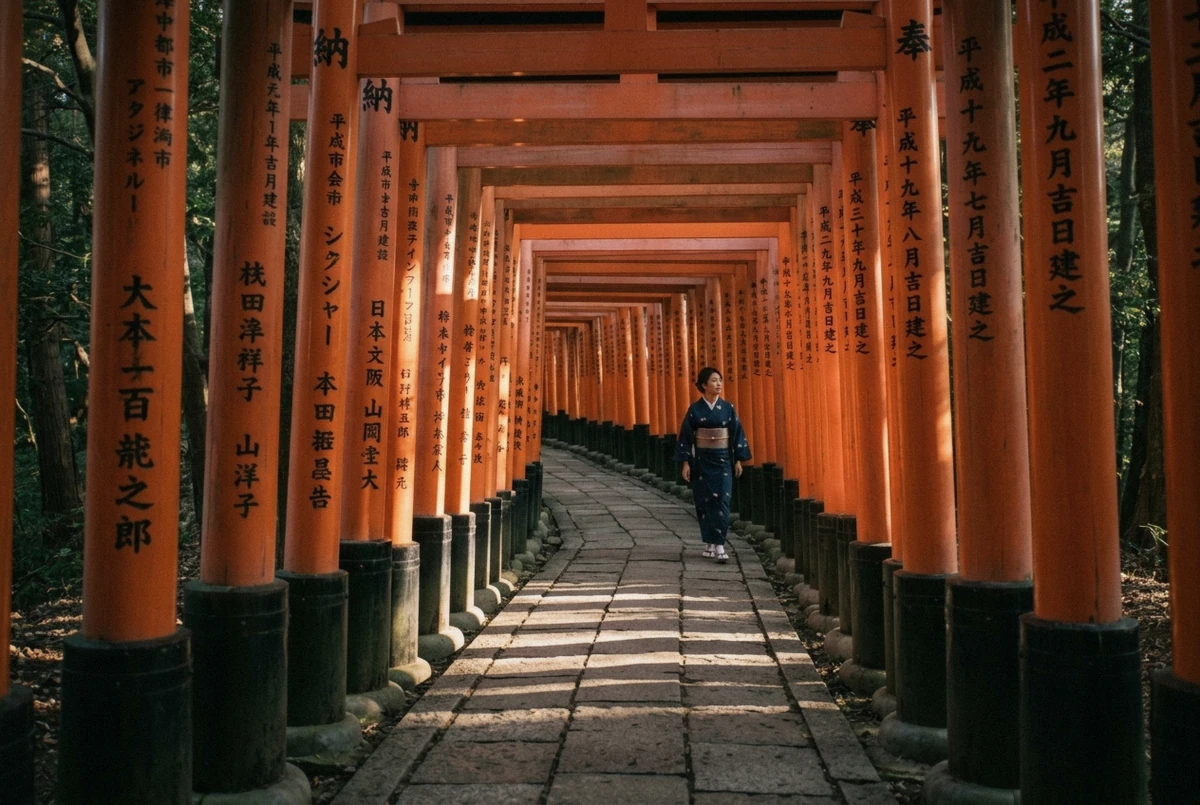
1 of the toursTen thousand vermilion torii climbing the mountain in receding tunnels. The most graphic frame in Japan, and open 24 hours, which is the crowd cheat code.
Stops here: Pick your location, $76
-
Kinkaku-ji
No tourThe Golden Pavilion doubled in its pond: a fixed viewing route and one composition, but that composition is why it is on every list.
No package shoots here: fixed visitor route, no room to stage. Bring your own camera and go at opening.
-
Ginkaku-ji
No tourThe Silver Pavilion's raked sand garden and moss slopes. Quieter than its golden sibling and better composed from the hillside path above.
No package shoots here. It anchors the north end of the Philosopher's Path. Combine the two.
-
Philosopher's Path
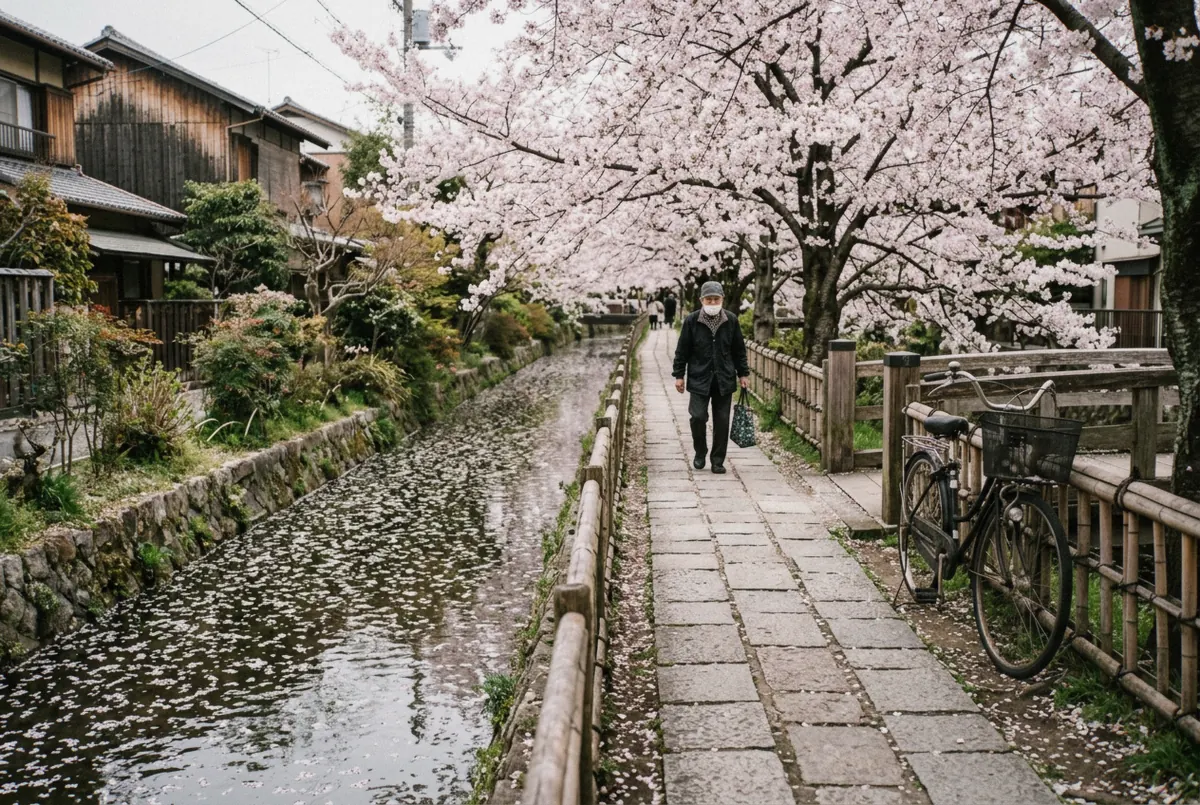
No tourTwo kilometres of canal-side walking under several hundred cherry trees. Ordinary in July, extraordinary for the two sakura weeks, and never as crowded as Higashiyama.
No package works this side of town: sakura sessions shoot Gion and Maruyama Park instead.
-
Nanzen-ji Aqueduct
No tourA Meiji-era brick aqueduct marching through temple grounds. The receding arches are a film-crew favourite and one of the few Kyoto frames that works at midday.
No package stages here, which is odd, because the arches photograph superbly. Self-serve spot.
-
Heian Shrine
No tourVermilion courts wide enough to swallow a crowd and one of Japan's largest torii out front. Open, even light that flatters kimono colors at mid-morning.
No package names it, though its weeping cherries are a local sakura secret.
-
To-ji Pagoda
No tourJapan's tallest wooden pagoda, fifteen minutes from Kyoto Station. Late light across the pond garden, and the Kobo-san flea market every 21st of the month.
No package comes this far south. Combine it with your Shinkansen day. It is the last pagoda you see from the train.
Higashiyama: the Lanes Everyone Came For
Eight of the 24 spots sit in one walkable square kilometre below Kiyomizu-dera, which is why nearly every private photoshoot in Kyoto defaults to this district. The geometry does the work: lanes slope, so the Yasaka Pagoda appears ABOVE the rooflines in your frame rather than behind them, and the machiya fronts box the light into soft corridors. The catch is arithmetic, not artistry. The first tour buses unload around 9:30, and from then until dusk Sannenzaka is a river of people. Photographers who work these lanes daily solve it by starting at first light; reviewers on the most-booked session describe 8am slots that had the lanes to themselves, and summer sessions moving even earlier.
Two etiquette lines keep a Higashiyama shoot friction-free: the lanes are residential, so tripods spread across the paving at rush hour make enemies fast, and Kiyomizu-dera itself restricts staged photography inside the grounds. Every kimono session that mentions the temple is actually shooting the free lanes below it, which photograph better anyway. If you want the pagoda without a single pedestrian and without the alarm clock, the night session at the lit pagoda is the only package that works after dark.
Gion and the River: Texture and Lantern Light
Gion rewards a different kind of frame: closer, darker, more textured. Hanamikoji's teahouse facades are the district's postcard, but the working photographers' favourite is the Shirakawa canal: willows, water and Tatsumi Bridge give you three compositional layers in fifty metres, which is why the Gion specialist session can fill a ninety-minute shoot without leaving the block.
One rule is not optional here. Since 2019 photography has been banned on Gion's private side-lanes, with fines posted at ¥10,000. The district's response to visitors chasing geiko for portraits. Booked sessions are unaffected because they work the permitted public streets, and the photographers know exactly where the line runs; if you are shooting solo, stay on Hanamikoji proper and the Shirakawa banks and you are fine. After sunset, cross the river: Pontocho's lanterns switch on and the alley becomes the best low-light frame in the city, and the Kamo riverbank at Sanjo catches the last warm light. The samurai walk stages its armored finale exactly there for that reason.
Arashiyama: One Station, Five Frames
Arashiyama compresses five spots into a ten-minute radius of one tram stop, which makes it the most efficient photo morning in Kyoto. The bamboo grove is the headliner. Sun through the stalks striping the path, and it obeys the same clock as Higashiyama: clear before 8am, shoulder-to-shoulder by 9:30. The Arashiyama session meets in front of the Randen station precisely so the grove comes first, then works outward to Togetsukyo Bridge and the riverbank.
The quieter frames are the ones people miss. Nonomiya Shrine's black torii sits directly on the grove path; the Kimono Forest's six hundred fabric pillars light up at dusk inside the station itself, a free tripod-friendly shot while everyone else queues for dinner; and Tenryu-ji's pond garden borrows the whole mountainside as backdrop if you pay the garden fee and carry your own camera. No session shoots inside. In November this district outranks everything: the hills behind Togetsukyo turn full color and morning mist sits on the river.
Beyond the Center: Where No Package Goes
Seven spots on the map carry a "no package" badge, and that is information, not a defect. Fushimi Inari is the exception that proves the rule. One session lets you choose it as your backdrop, but the torii tunnels are also open 24 hours and free, so a dawn visit with your own camera costs only sleep. The mountain thins the crowd for you: ten minutes up from the lower tunnels the gates keep going and the people do not.
The rest are self-serve by nature. Kinkaku-ji funnels every visitor along one fixed route, so there is no room to stage anything. Arrive at the 9:00 opening and shoot the classic reflection before the pond gets an audience. The Philosopher's Path and Nanzen-ji's brick aqueduct make the best half-day pair: canal cherries at the top, film-set arches at the bottom, and Ginkaku-ji between them. To-ji's pagoda earns its train detour on the 21st of any month, when the Kobo-san market fills the grounds with stalls and incidental life. None of these need a photographer. They need timing, which the light table below gives you.
Best Light, Spot by Spot
Kyoto's lanes run roughly north–south between two hill lines, so light arrives late and leaves early. Golden hour here is a schedule, not a mood.
| Window | Where it works | Why |
|---|---|---|
| Dawn – 8am | Sannenzaka, bamboo grove, Fushimi Inari | Empty frames; soft light before the sun clears the eastern hills |
| 8 – 10am | Kiyomizu lanes, Tenryu-ji, Kinkaku-ji at opening | First direct light; the gold pavilion needs morning sun to glow |
| Midday | Nanzen-ji aqueduct, Kimono Forest (interior), museums | Brick and covered frames survive hard overhead light; lanes do not |
| Golden hour | Kamo River, Togetsukyo, Heian Shrine courts | Open west-facing water and courtyards catch the last warm hour |
| Blue hour – night | Pontocho, Yasaka Pagoda (lit), Kimono Forest | Lanterns and floodlights take over; the night session works this window |
One Full Photo Day, Hour by Hour
The full-day version of the map, ordered by light. It front-loads the two crowd-critical spots and ends where the lanterns are.
-
05:45
Fushimi Inari at first light
The gates are open all night; walk ten minutes up past the lower tunnels and shoot downhill through empty torii.
-
08:00
Train to Arashiyama
JR Inari to Saga-Arashiyama is one line with a change at Kyoto Station. About 40 minutes with the walk.
-
08:45
Bamboo grove while the stripes last
The striped light lives until mid-morning; Nonomiya Shrine's black torii is on the same path.
-
10:00
Togetsukyo and the riverbank
Coffee on the south bank; the bridge composes best from the east with the hills stacked behind.
-
12:30
Midday at the Nanzen-ji aqueduct
Keage Station, ten minutes' walk. The brick arches are the rare Kyoto frame that likes hard light.
-
14:00
Philosopher's Path to Ginkaku-ji
Two canal-side kilometres; in sakura weeks this stretch alone is worth the trip.
-
17:00
Golden hour on the Kamo River
Sanjo Bridge west bank. The bridges line up into the sunset; the city sits down beside you.
-
18:30
Blue hour in Gion, night at the pagoda
Pontocho's lanterns first, then walk up through Yasaka Shrine to catch the lit pagoda. The night session's exact route.
The Three Rules That Keep Your Shoot Legal
First: Gion's private side-lanes are closed to photography. Posted fines of ¥10,000, and the public streets photograph just as well, so there is no trade-off worth making. Never photograph geiko or maiko without consent anywhere; they are commuting to work.
Second: temple interiors and paid grounds (Kiyomizu-dera, Kinkaku-ji, Tenryu-ji's garden) restrict commercial and staged photography. Personal snapshots are fine, posed sessions with a photographer are not, which is why every package on the comparison works the free public lanes instead. Third: tripods are the flashpoint, not cameras.
In narrow lanes at busy hours they block residents' paths and shopkeepers' doors. Handhold in the lanes, save the tripod for the riverbank, the aqueduct and night work at the pagoda. Every photographer behind the bookable sessions carries these rules by reflex; solo shooters inherit them by reading this paragraph.
Which Session Covers Which Spots
The map's join, flattened into one table: sessions on the left, the spots their listings name on the right.
| Session | Spots it works | Session length |
|---|---|---|
| Private photoshoot service | Yasaka Pagoda, Sannenzaka, Shirakawa canal, Pontocho, Maruyama Park | 45 min – 1.5 hrs |
| Choose-your-location shoot | Fushimi Inari OR Gion OR the bamboo grove: one per session | 1.5 hrs |
| Props & travel photography | Higashiyama lanes and Gion streets | 30 min – 1.5 hrs |
| Kimono makeover + shoot | Ninenzaka, Yasaka Shrine approach, Gion lanes | 30 min – full day |
| Gion district specialist | Hanamikoji, Sannenzaka on longer slots, the permitted Gion streets | 1 – 6 hrs |
| Arashiyama session | Bamboo grove, Togetsukyo, Kimono Forest, riverside | 30 min – 6 hrs |
| Samurai walk | Kamo riverbank at Sanjo, in armor | 1.5 hrs |
| Night pagoda session | Yasaka Pagoda lit, empty Higashiyama lanes | 10 – 60 min |
| Cherry blossom session | Maruyama Park, Gion's sakura streets, Shirakawa canal | 1 – 1.5 hrs |
Kyoto Photo Spots: What Shooters Ask
What is the most scenic spot in Kyoto?
By votes-with-feet, the Yasaka Pagoda seen up Sannenzaka's slope. It is the one frame that reads as Kyoto instantly, which is why six of the bookable sessions work it. The photographers' answer is the Shirakawa canal in Gion: three compositional layers, softer light, and a fraction of the crowd.
What are some hidden photo spots in Kyoto?
Ishibei-koji is the best-kept one on this map. Fifty metres of intact stone alley that most visitors walk past the entrance of. The Nanzen-ji aqueduct and Nonomiya Shrine's black torii are the other two frames the packages skip; all three carry a "no package" badge on the map, which is your signal to bring your own camera.
Where can I take photos at night in Kyoto?
Three reliable frames: the floodlit Yasaka Pagoda. The night session has it to itself after the day-trippers leave. Pontocho Alley once the lanterns come on, and the Kimono Forest's lit pillars inside Randen Arashiyama Station until 20:00. Fushimi Inari is technically open all night, but bring a friend and a fast lens; the upper mountain is genuinely dark.
Can you do a photoshoot at Fushimi Inari?
Yes: the choose-your-location session offers the torii tunnels as one of its three backdrops, and reviewers describe early starts that beat the crowds. The shrine's public paths allow photography; the working rule is to keep the path clear and skip the tripod during busy hours.
Is it OK to take pictures in Gion?
On the public streets, yes: Hanamikoji and the Shirakawa canal are shot by every session on this site. The ban covers Gion's private side-lanes, where fines are posted at ¥10,000, and photographing geiko or maiko without consent anywhere. The full rule and how booked shoots handle it has its own page.
Which Kyoto photo spots are best during cherry blossom season?
Maruyama Park's weeping cherry, the Shirakawa canal in Gion, and the Philosopher's Path, in that order if your time is short. The first two are exactly where the cherry blossom session shoots in the late-March-to-mid-April window; the path is self-serve and quieter than either.